Ground-based roof cleaning
⏱ Reading time 6-7 minutes
📝 30-second summary
Ground-based roof cleaning can reduce the need for ladders, scaffolding and walking on roofs, but it does not remove electrical or other safety risks. This guide explains how to assess overhead power lines, choose suitable equipment, understand pole materials, protect people and property, compare ground-based roof-cleaning systems, and know when to stop and reassess the job. Safe planning, not simply working from the ground, is the key to reducing risk.
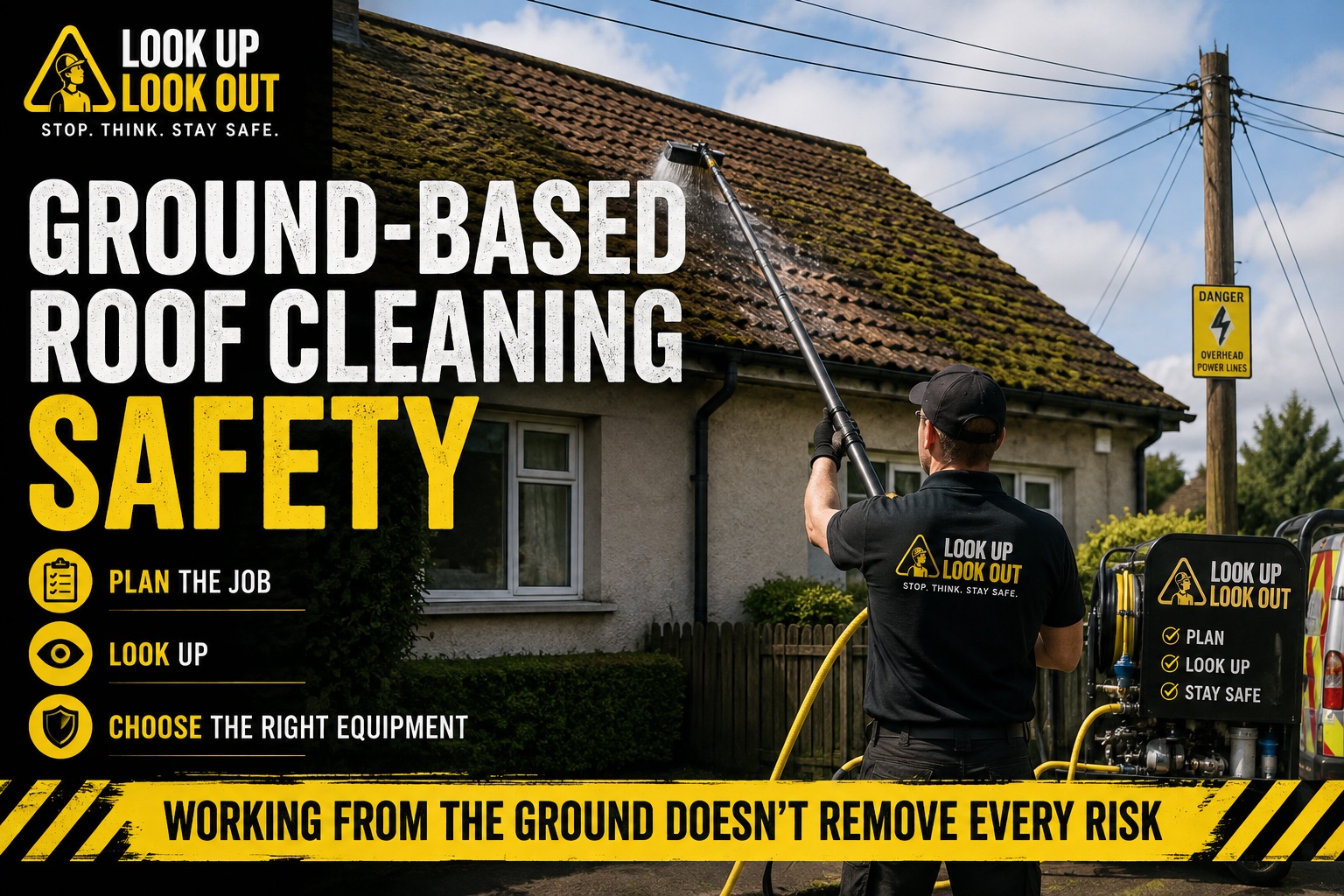
Roof cleaning from the ground can reduce the need for ladders, scaffolding or walking on a roof, but it does not remove every risk. Long poles, overhead power lines, falling debris, fragile tiles, chemicals, runoff and poor equipment choices all need to be considered before work starts.
This page is provided for general safety awareness only. It is not legal advice, training, approval or endorsement of any product, supplier or course. Always check the method, equipment, training, insurance and site conditions before starting work.
The key message
Ground-based roof cleaning is not automatically electrically safer. A system may be designed to clean from the ground but still use carbon fibre, aluminium or other conductive pole sections. If overhead power lines or nearby service cables are present, the material and insulation status of the pole matters.
Before raising any pole
- Look up and around before unloading or extending poles. Check for overhead power lines, service cables, telephone wires and other obstructions.
- If overhead electrical lines create concern, stop and seek advice before starting. In the UK, call 105 to contact the local electricity network operator.
- Do not work close to overhead power lines. No pole material makes it safe to work near live overhead lines.
- Check the roof type and condition. Look for cracked, loose, brittle, fragile, asbestos-containing or heavily weathered materials.
- Control the fall zone. Moss, tiles, tools and debris can damage cars, conservatories, glass roofs, gutters, drains, pets, customers and members of the public.
- Check the weather. Avoid strong wind, lightning risk, icy conditions, poor visibility or conditions that make pole control difficult.
- Check chemicals, biocides and runoff. Follow product labels, COSHH requirements, PPE guidance and environmental precautions.
- Photograph obvious pre-existing damage before starting. This protects both the customer and the cleaner.
Pole choice and electrical risk
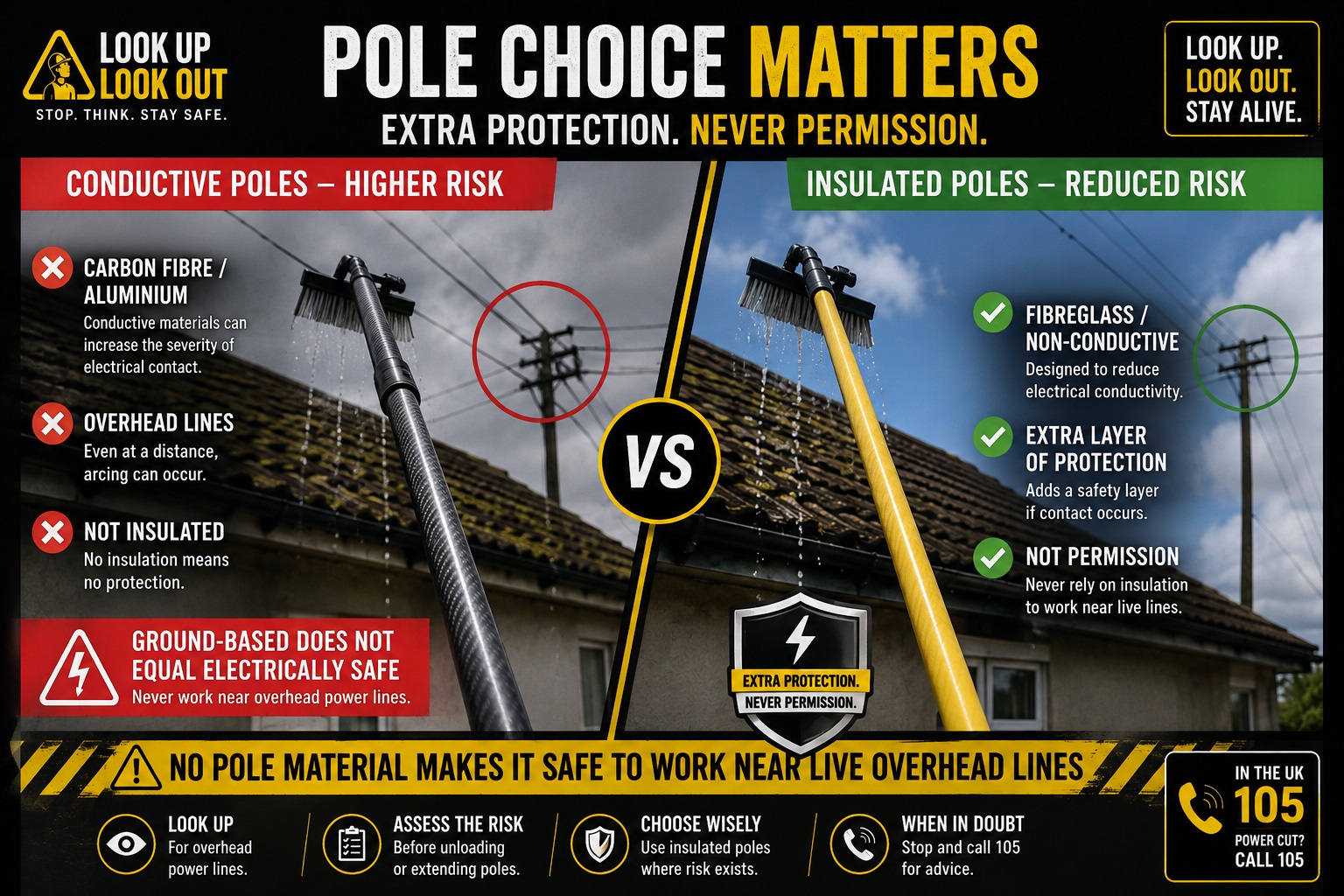
Where long poles are used for roof cleaning, operators should consider the electrical risk created by overhead power lines and nearby service cables. Conductive poles, including carbon fibre and aluminium poles, can increase the severity of that risk if contact or close approach occurs.
Look Up Look Out recommends using fibreglass, non-conductive or properly insulated pole systems where electrical risk is foreseeable. However, this is an additional safety layer only. It is not permission to work near overhead power lines or unsafe electrical hazards.
If a supplier says a product is insulated, ask what part of the system is insulated, what it is insulated against, whether it has been independently tested, and whether a public certificate or technical evidence is available.
Ground-based product and equipment information

The following information is listed to help cleaners compare options. It is not an endorsement or approval. Product claims can change, so always check the current supplier information before buying or using equipment.
| Provider / system | Ground-based claim | Pole material / insulation information publicly found | Look Up Look Out note |
|---|---|---|---|
| Ionic Systems Roof Wand | Marketed for ground-level roof cleaning and designed to reduce the need for ladders, scaffolding or walking on roofs. | Public information describes glass-fibre insulated protective sections and a carbon fibre mast/boom element. A clear public voltage rating for the complete Roof Wand system was not found during this review. | Strongest public lead found for a ground-based roof-cleaning system with stated protective non-conducting / insulated elements. Ask Ionic to confirm exactly which parts are insulated and whether any test certificate or voltage rating applies. |
| BWCA / Roof Wand route | Training is linked to cleaning a roof from the safety of the ground using the Roof Wand. | Linked to the Roof Wand system. Insulation details should be checked against Ionic’s current technical information. | Useful ground-based training route, especially for cleaners considering the Roof Wand method. |
| SkyVac / skyScraper systems | Marketed for roof scraping from ground level using telescopic poles and shaped scraper heads. | Public product information includes carbon fibre telescopic poles. A public electrical insulation or voltage rating for the roof-scraping pole was not found during this review. | May be ground-based, but ground-based does not equal insulated. Avoid conductive pole use where overhead electrical risk is foreseeable unless suitable insulation evidence is confirmed. |
| Benz roof scraper / softwash systems | Offers roof scraper sets and softwash equipment for exterior cleaning. | Public information includes aluminium or carbon fibre pole options depending on kit. A public electrical insulation rating was not found during this review. | Useful roof-cleaning information and methods, but pole choice and overhead-line risk must be checked carefully. |
| Pure Freedom RoofMaster / similar systems | Marketed for roof cleaning from the ground or with pole-based methods depending on setup. | Compatibility with different pole choices may vary. A public electrical insulation rating for all configurations was not confirmed during this review. | Check the exact pole material and insulation status before use near any foreseeable electrical risk. |
| Rutland / Watertek roof scraper kits and similar suppliers | Provide roof scraper heads and pole-based roof-cleaning equipment. | Some public listings include aluminium or standard pole connections. A public electrical insulation rating was not confirmed during this review. | Treat as equipment to assess, not as electrically safer by default. |
Training and course options
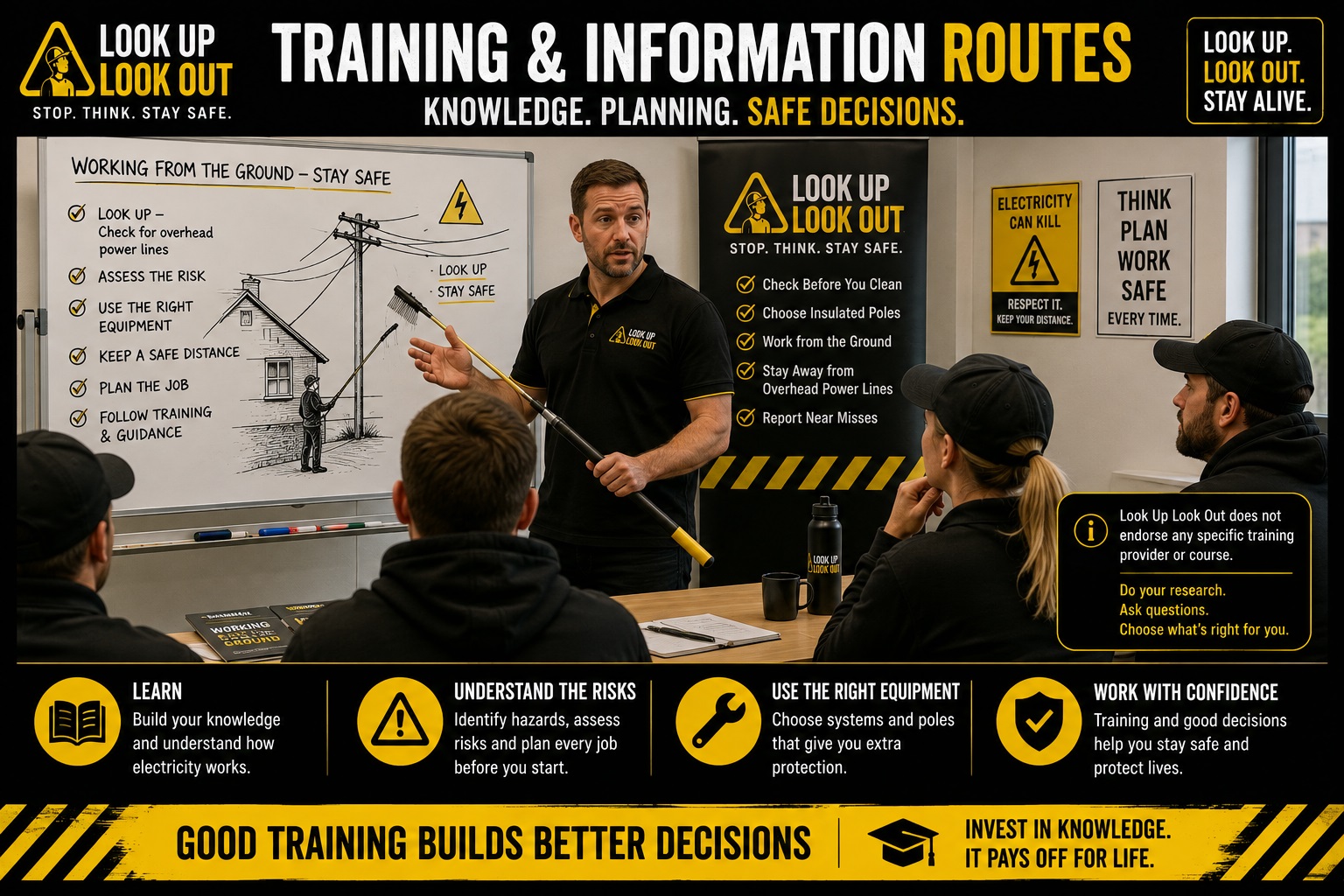
The following training providers and courses are listed for information only. Look Up Look Out does not endorse, approve or recommend one provider over another. Cleaners should check course content, accreditation, insurance requirements, equipment suitability and whether the method being taught is appropriate for the work they intend to carry out.
| Provider | Course / training | What it appears to cover | Recognition / accreditation note |
|---|---|---|---|
| British Window Cleaning Academy (BWCA) | RW7: Roof Cleaning / Roof Wand – Roof Cleaning | Training on cleaning a roof from the safety of the ground using the Roof Wand, including setup, technique and health and safety elements. | Industry training route. Listed as a BWCA roof-cleaning course. Do not describe as LANTRA or IOSH unless BWCA states that for this course. |
| BWCA | RS8: Roof Sealant Application | Add-on roof sealant training linked to the Roof Wand route. Public wording says it is for those who have completed RW7 or already own a Roof Wand. | Useful for cleaners considering cleaning plus treatment/sealant services. |
| BWCA | SW5: Soft Washing | Soft washing training, including assessing surfaces, applying chemicals and safe working practices. | Relevant where roof cleaning involves chemicals, softwash or biocide treatment. |
| SkyVac / Spinaclean | Specialist Roof Cleaning Course | Specialist roof-cleaning course covering roof-cleaning methods, equipment, practical skills, health and safety and business expansion. | Publicly described by SkyVac as LANTRA and CPD accredited. Training recognition does not automatically mean every item of equipment used is electrically insulated. |
| Lantra | Specialist Roof Cleaning | Lantra listing describes a comprehensive roof-cleaning training programme with hands-on and theoretical instruction. | Useful independent training-directory source for the SkyVac/Lantra route. |
| Lantra / SkyVac | Exterior Cleaning Specialist Training Course | Wider exterior-cleaning course covering roof-cleaning-related skills and methods. | Publicly listed as Lantra training and described by SkyVac as CPD and LANTRA accredited. Check whether the course matches the cleaner’s intended work. |
Questions to ask before choosing a roof-cleaning system or course
- Can the method be carried out fully from ground level on the type of property I normally clean?
- What is the maximum safe working reach, and how is pole control maintained at that reach?
- Is the pole carbon fibre, aluminium, fibreglass, hybrid or insulated?
- If insulation is claimed, which sections are insulated and what test evidence supports the claim?
- Does the course cover overhead power-line risk, 105/DNO advice and when to walk away?
- Does the course cover roof type, fragile surfaces, falling debris, public protection and customer property protection?
- Does the method involve chemicals, biocides, sealants or runoff that need COSHH, PPE or environmental controls?
- Will my insurer cover this work using this method and equipment?
Legal and safety guidance
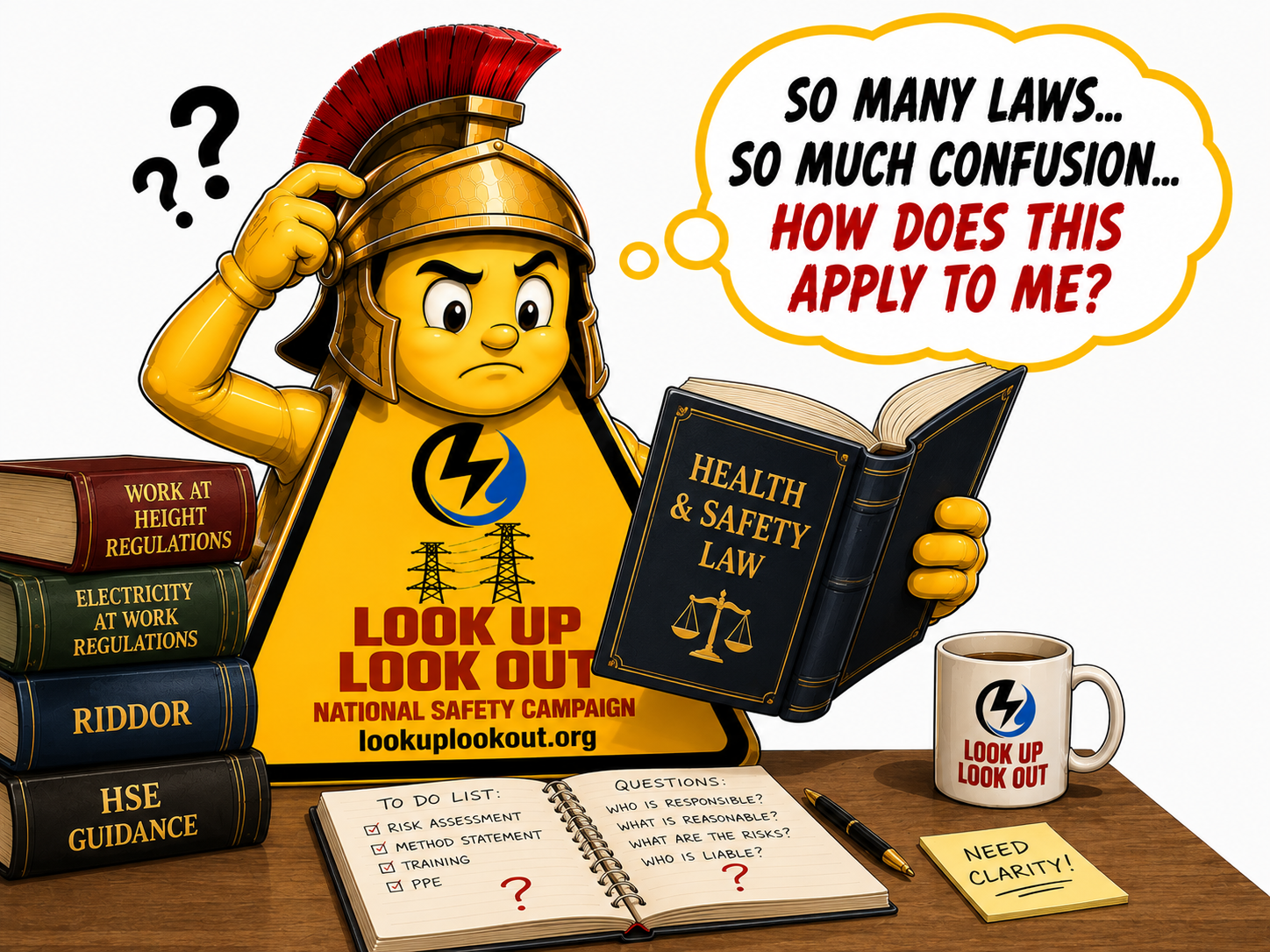
There does not appear to be one single UK law written specifically for roof cleaning. However, when roof cleaning is carried out as work, ordinary health and safety duties may apply. These may include general duties under the Health and Safety at Work etc. Act 1974, site-specific risk assessment duties, work equipment duties under PUWER, COSHH duties where chemicals or biological hazards are involved, and work-at-height duties if ladders, scaffold, MEWPs or roof access are used.
If the work is genuinely carried out from ground level, the main issue may not be work at height for the cleaner. The main issues may be pole control, overhead power lines, falling debris, equipment suitability, chemicals, runoff, public protection and property damage. If the job cannot be completed safely from ground level, stop and reassess the method.
Simple Look Up Look Out roof-cleaning message
Roof cleaning from the ground may reduce the need to climb, but it does not remove the need to plan. Before starting, look up and around, check for overhead cables, protect people and property below, choose suitable equipment, and make sure the method is right for the roof. If electrical risk is foreseeable, avoid conductive poles unless proper insulation evidence is available. When in doubt, stop, seek advice, and call 105 where overhead electricity lines are a concern.
Useful links for readers to check
- Ionic Roof Wand
- BWCA courses
- BWCA RW7 Roof Cleaning
- BWCA RS8 Roof Sealant Application
- SkyVac Specialist Roof Cleaning Course
- Lantra Specialist Roof Cleaning
- HSE overhead power line guidance GS6
- HSE roof work guidance
- HSE window cleaning guidance
- Call 105