Water-Fed Pole Safety
Reading time: about 6 minutes
Summary
A practical, easy-read guide to safer water-fed pole window cleaning from the ground.
It takes you through the job from start to finish: parking and setting up safely, looking for overhead power lines and cables, checking the work area, choosing and checking the right pole, controlling the pole and hose while you work, and packing away safely.
The key message is simple: look up before the pole comes out. Electricity can jump across a gap, so you do not have to touch a power line to be seriously injured.
If you cannot make the job safe, change the way you do it, get help, put it off or walk away.
No job is worth your life.
Short, clear steps for window cleaners
Park safely. Look up before the pole comes out. Walk around the whole job. If you see a cable, stop and make sure the job can be done safely. Use the lightest pole that reaches the work. Keep control of the pole, hose and work area. If anything changes, stop and look again. If you are not happy, do not do the job.
This is the easy-read version. It uses short steps and plain words so it is quick to understand and use on the job. It covers water-fed pole cleaning from the ground only.
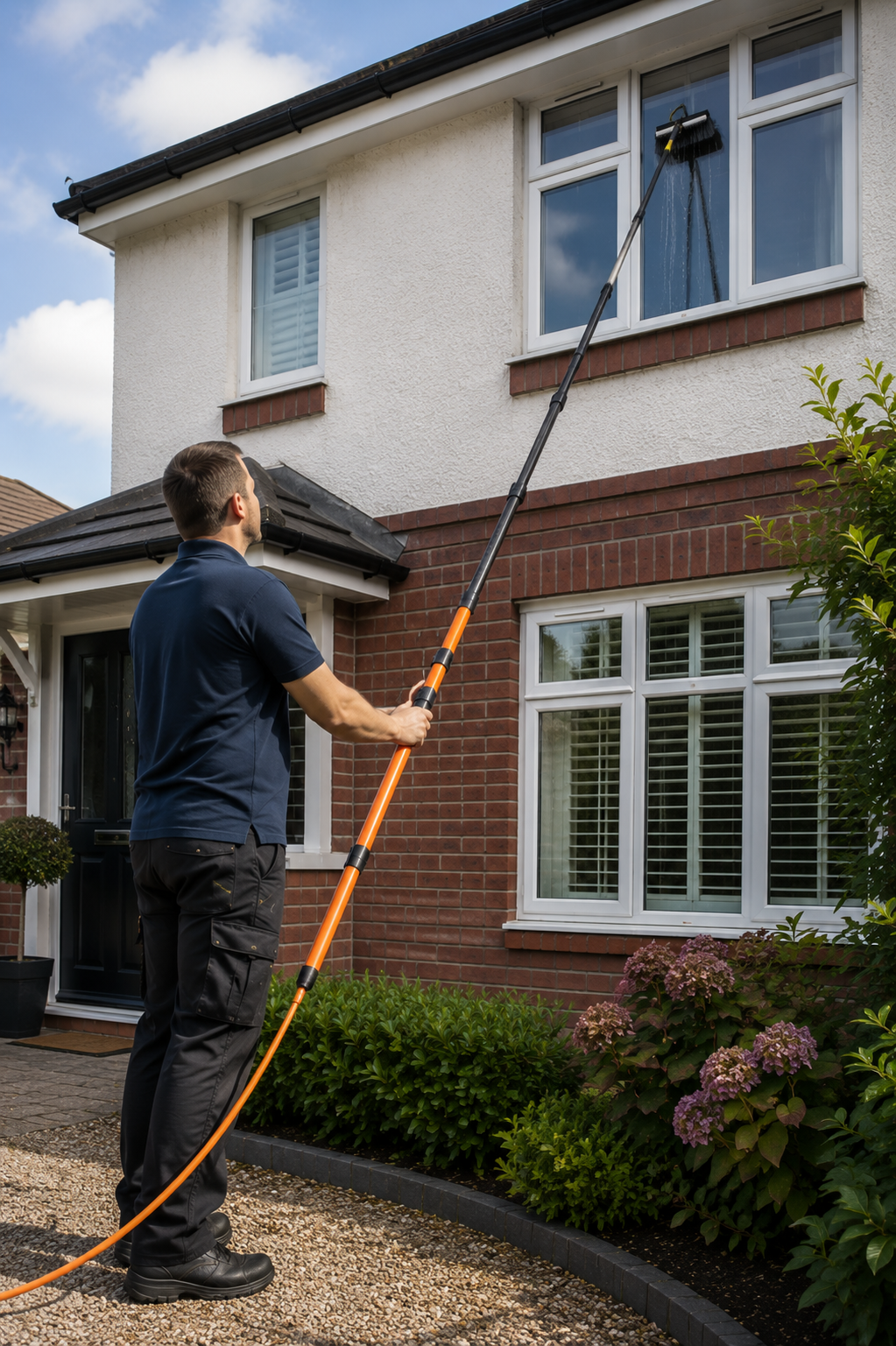
Step 1 – Before you leave for the job
✓ Make sure the tank, hose reel, poles and other kit are fixed down safely.
✓ Do not put too much weight in the van.
✓ Take the pole lengths you are likely to need.
✓ Check the weather before you go.
✓ Do not take damaged kit to a job.
Step 2 – Park the van safely
✓ Park where it is legal and safe.
✓ Try to unload from the side away from moving traffic.
✓ Do not block a pavement, dropped kerb, driveway or gate.
✓ Think about where the hose will run.
✓ If another parking place is safer, move the van.
A cone or hazard lights do not make bad parking safe.
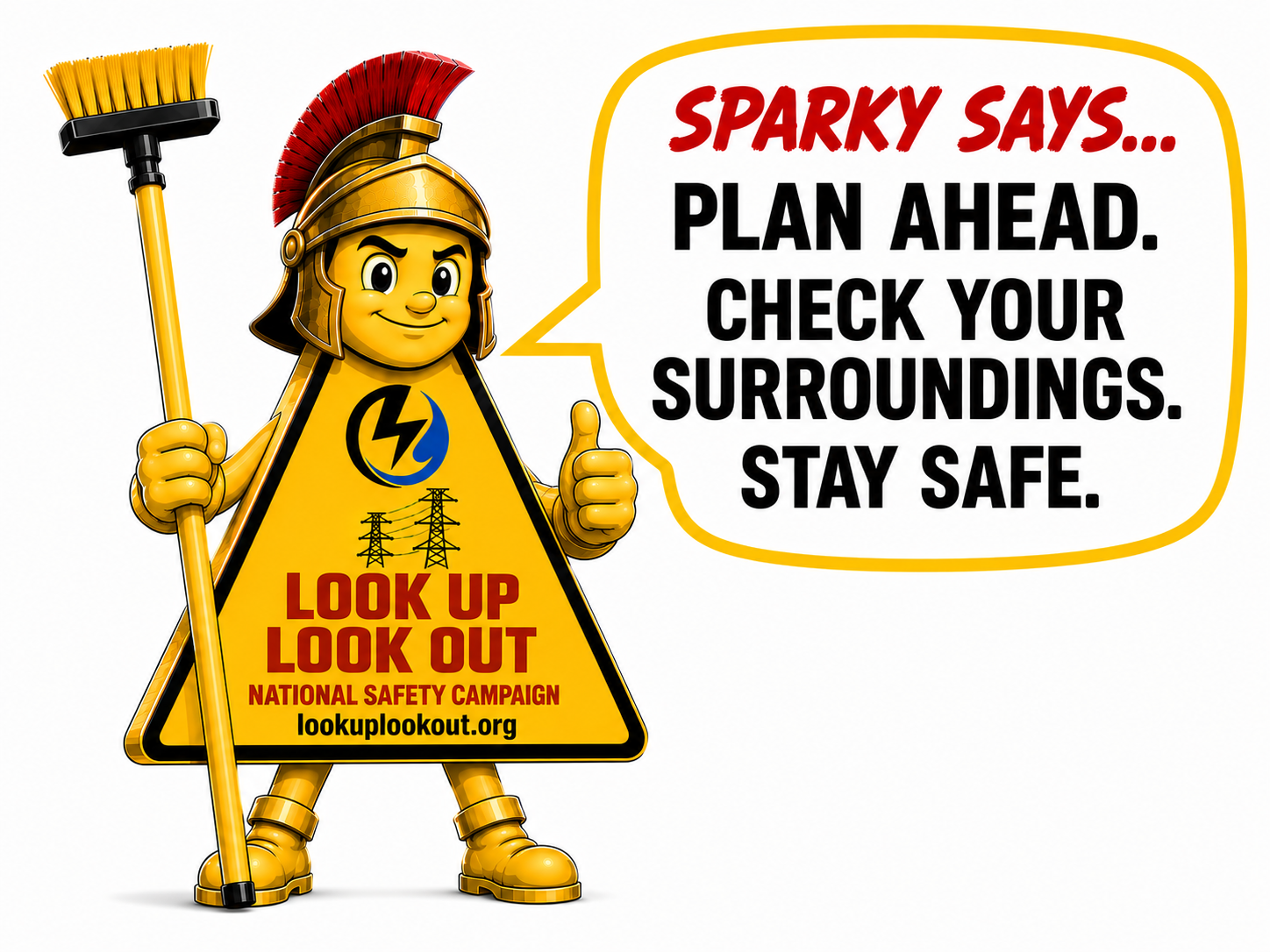
Step 3 – LOOK UP before you get the pole out
Stand back and look around the whole house or building.
✓ Look above the front, drive and parking area.
✓ Look down the side of the building.
✓ Look in the back garden.
✓ Look above garages, sheds and extensions.
✓ Look for cables from poles or buildings.
✓ Think about where the pole will go when you lift it, lower it, carry it or turn with it.
Not sure what a cable is? Treat it as live electricity.
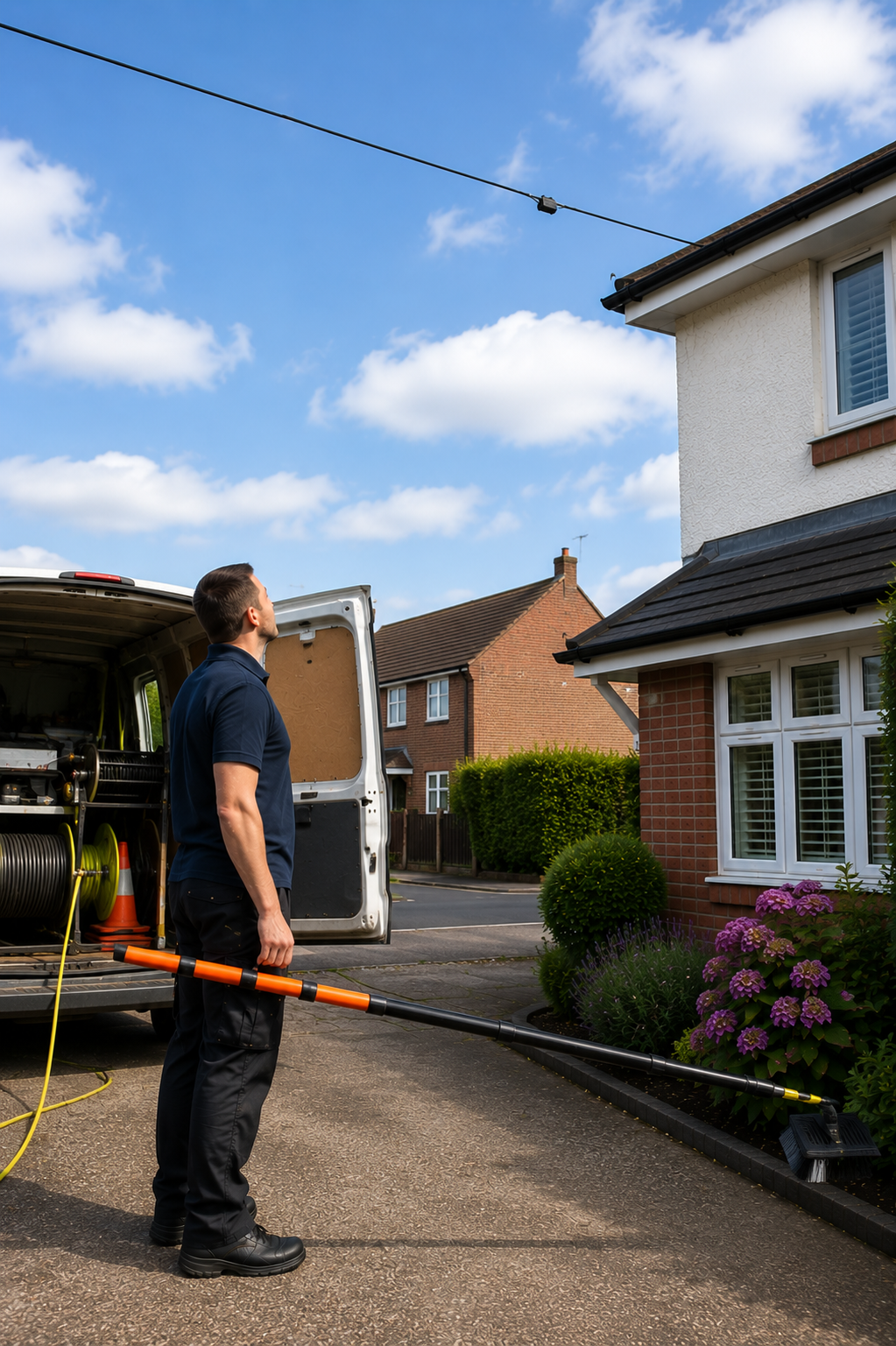
Step 4 – Walk the job and do your safety check
Do not look only at the windows. Look at the whole place.
✓ Are there power lines or cables above you?
✓ Is the ground safe to stand and walk on?
✓ Are there steps, slopes, gravel, ponds or tight spaces?
✓ Are cars or vans moving nearby?
✓ Could the hose trip someone?
✓ Could water make the ground slippery or icy?
✓ Are there children, pets, customers or other workers nearby?
✓ Is anything loose on the building that could fall?
✓ Is it too windy, dark or wet to control the pole safely?
✓ Are you tired, hurt or struggling to control the pole?
Ask yourself: Can I make this safe? If the answer is no, stop. Change the job, get help or walk away.
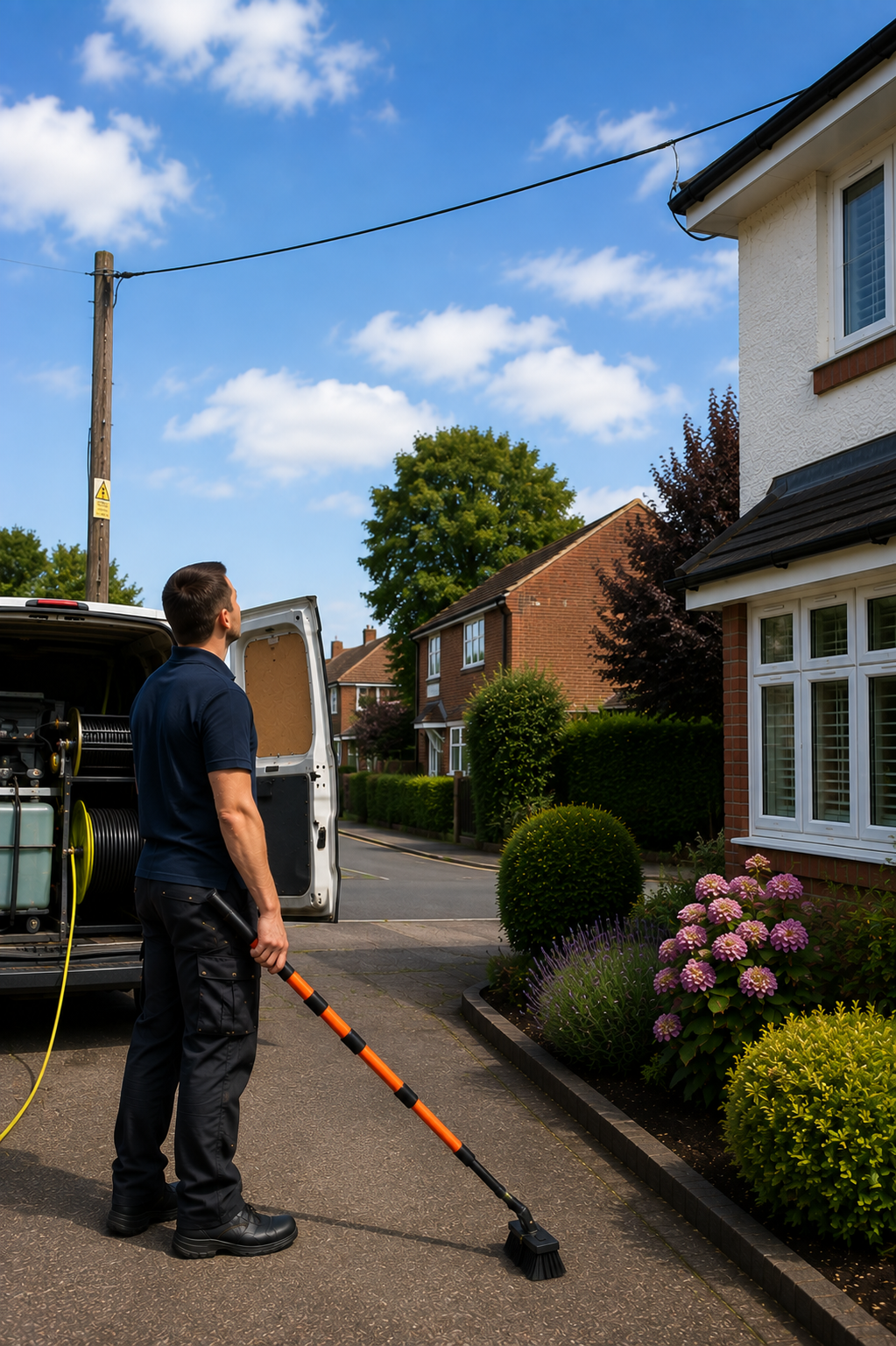
Step 5 – See a power cable? STOP
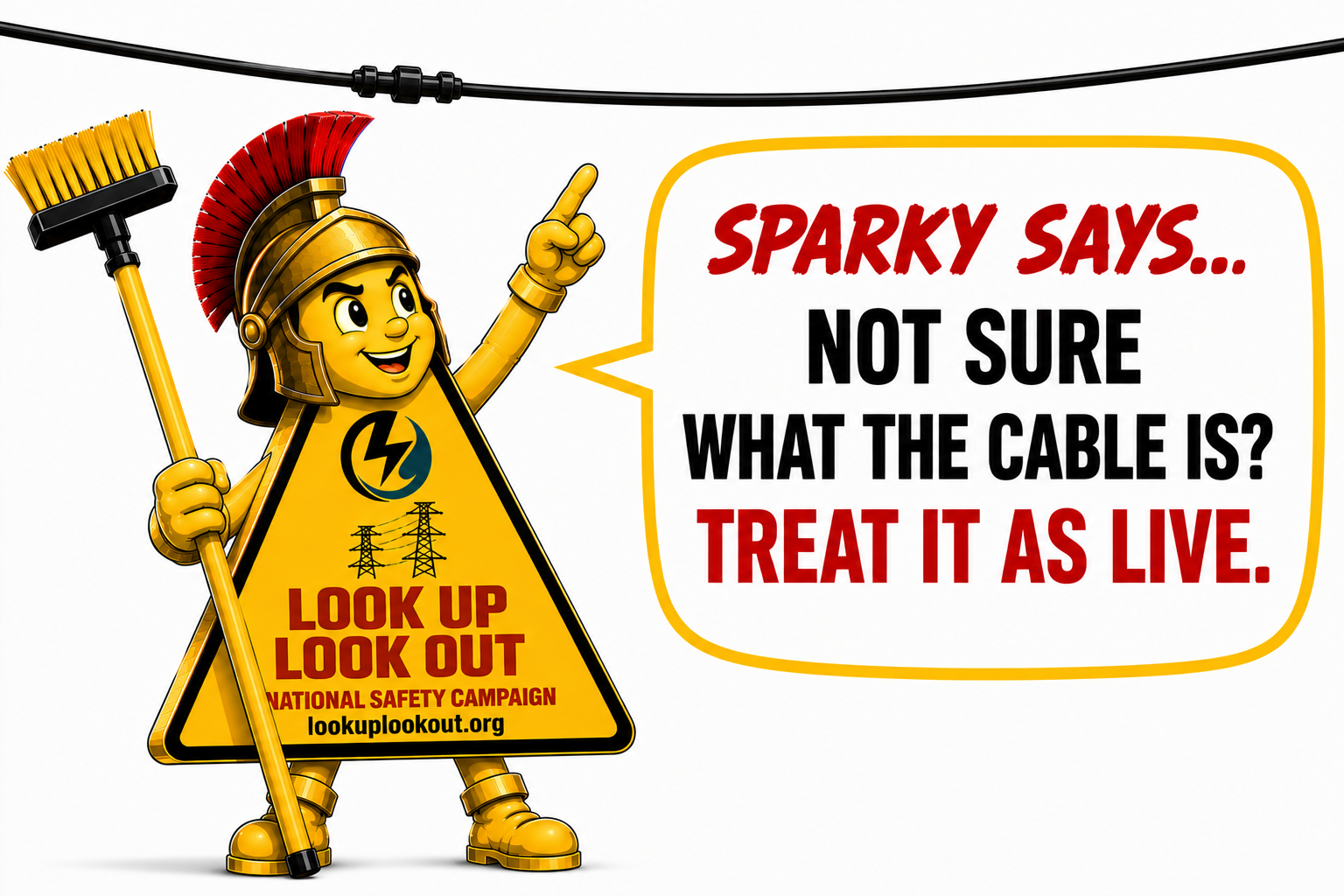
You do not have to touch a power line to be hurt. Electricity can jump across a gap.
There is no one safe distance for every power line. If you do not know how far away you must stay, do not guess.
Stop and get help if:
✓ You do not know if the cable is a power cable.
✓ The pole or brush could get too close to it.
✓ The pole could fall, swing or blow towards it.
✓ You do not have a clearly safe place to lift and lower the pole.
✓ You are only happy because the pole has a special safety handle.
If you are not sure what to do
• In Great Britain, call 105. It will put you through to the local company that runs the power lines.
• In Northern Ireland, call 03457 643 643.
• Do not start until you know the job can be done safely.
• If it cannot be made safe, put the job off or do not take it.
A special safety handle gives extra protection. It does NOT make it safe to work close to a power line.
Step 6 – Speak to the customer
✓ Make sure you both know what is being cleaned.
✓ Ask about locked gates, pets, children, deliveries or building work.
✓ Tell the customer where they need to keep clear.
✓ If you find a danger, explain why you are stopping or changing the job.
If a customer says, “It has always been fine”, that does not make it safe.

Step 7 – Make the work area safe
✓ Put the hose where people are least likely to trip over it.
✓ Keep the hose away from moving cars where you can.
✓ Use signs, covers, mats or barriers if the job needs them.
✓ Keep people away from the area where the pole could fall or swing.
✓ If there are power lines nearby, know the safe place to lift and lower the pole before you start.
Step 8 – Pick the right pole
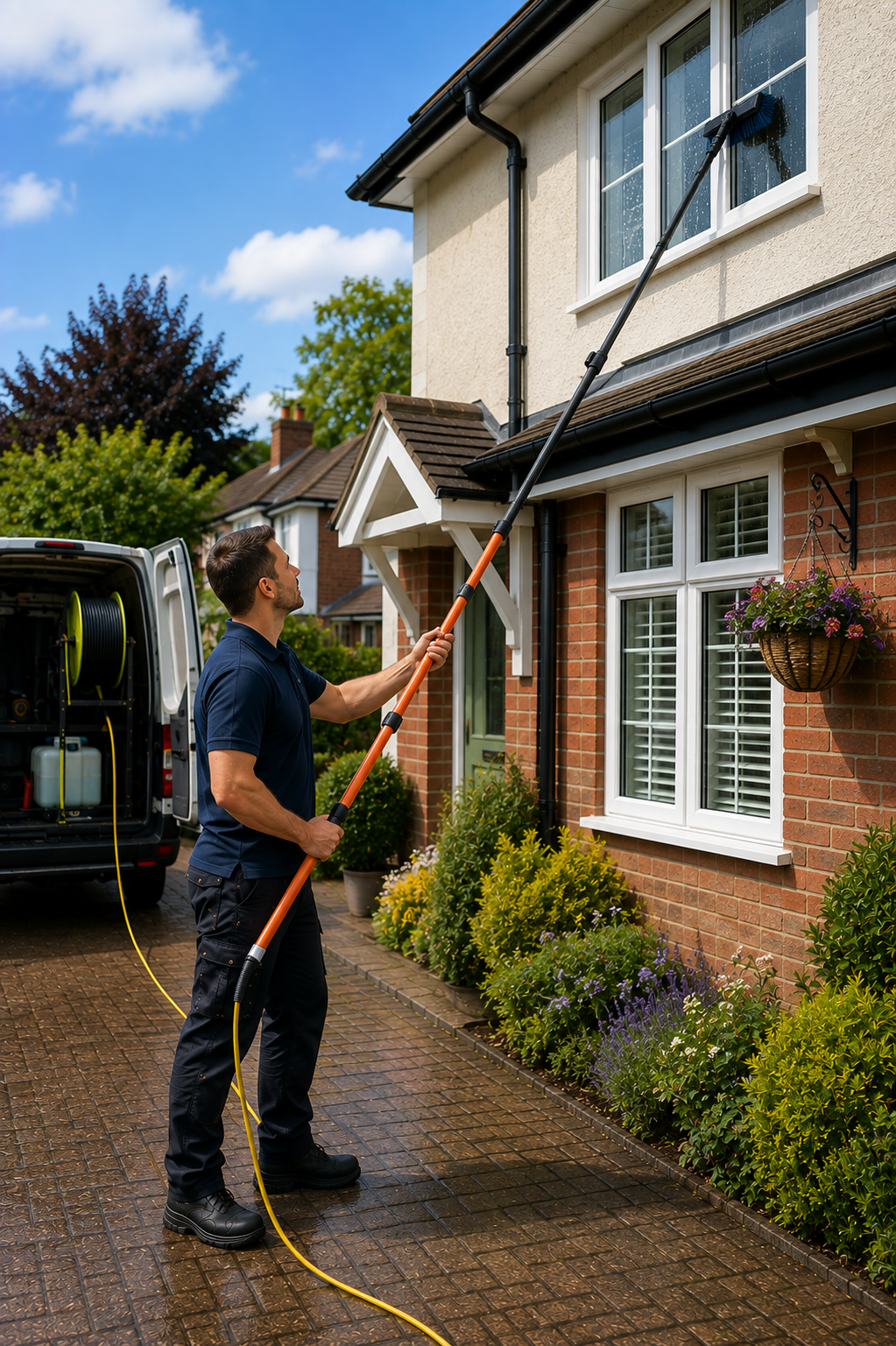
Use the lightest pole that safely reaches the work. A longer pole means more weight and more strain on your body.
✓ Use only the length you need.
✓ Do not use a very long pole for a low job.
✓ Think about the weight and balance of the pole.
✓ Do not use a pole that is too short and makes you stretch or lean badly.
✓ Use the pole as the maker tells you.
Step 9 – Check the pole before you lift it
✓ Check the pole for cracks, splits, dents or bad wear.
✓ Check the clamps hold properly.
✓ Check the brush and fittings are secure.
✓ Check the hose and joints for leaks or damage.
✓ If anything looks wrong, do not use it.
Step 10 – Do the job safely
✓ Lift and lower the pole only from the safe place you chose.
✓ Keep both feet steady and keep control of the pole.
✓ Move your whole body. Do not make your arms and shoulders do all the work.
✓ Change sides and take breaks before you get too tired.
✓ Keep watching the hose, cars, people and the ground.
✓ Do not walk to another part of the job with the pole raised.
✓ Do not swing the pole out into open space if you could lose control.
✓ Stop if the wind gets too strong.
✓ Do not use the pole in thunder or lightning.
✓ Never leave a raised pole on its own.
Step 11 – If anything changes, STOP and look again
Things can change while you work. A car can arrive. A child can come outside. The wind can get stronger. You may spot a cable you did not see before.
✓ Stop before carrying on.
✓ Make the area safe again.
✓ If you are tired or losing control, shorten the pole, take a break or stop.
✓ If you spot a new cable or power risk, lower the pole safely and go back to Step 5.
✓ If the customer asks for extra work, check that new work before you do it.
Step 12 – Pack away safely
✓ Lower the pole in the safe place before carrying it back to the van.
✓ Turn the water off.
✓ Reel in or gather the hose so nobody can trip over it.
✓ Take away signs or barriers only when the danger has gone.
✓ Check for water, ice, damage or kit left behind.
✓ Fix the pole, hose reel and other kit down safely in the van.
✓ Before you drive away, check for people, bikes, children, pets and traffic.
Step 13 – If the pole touches a power line
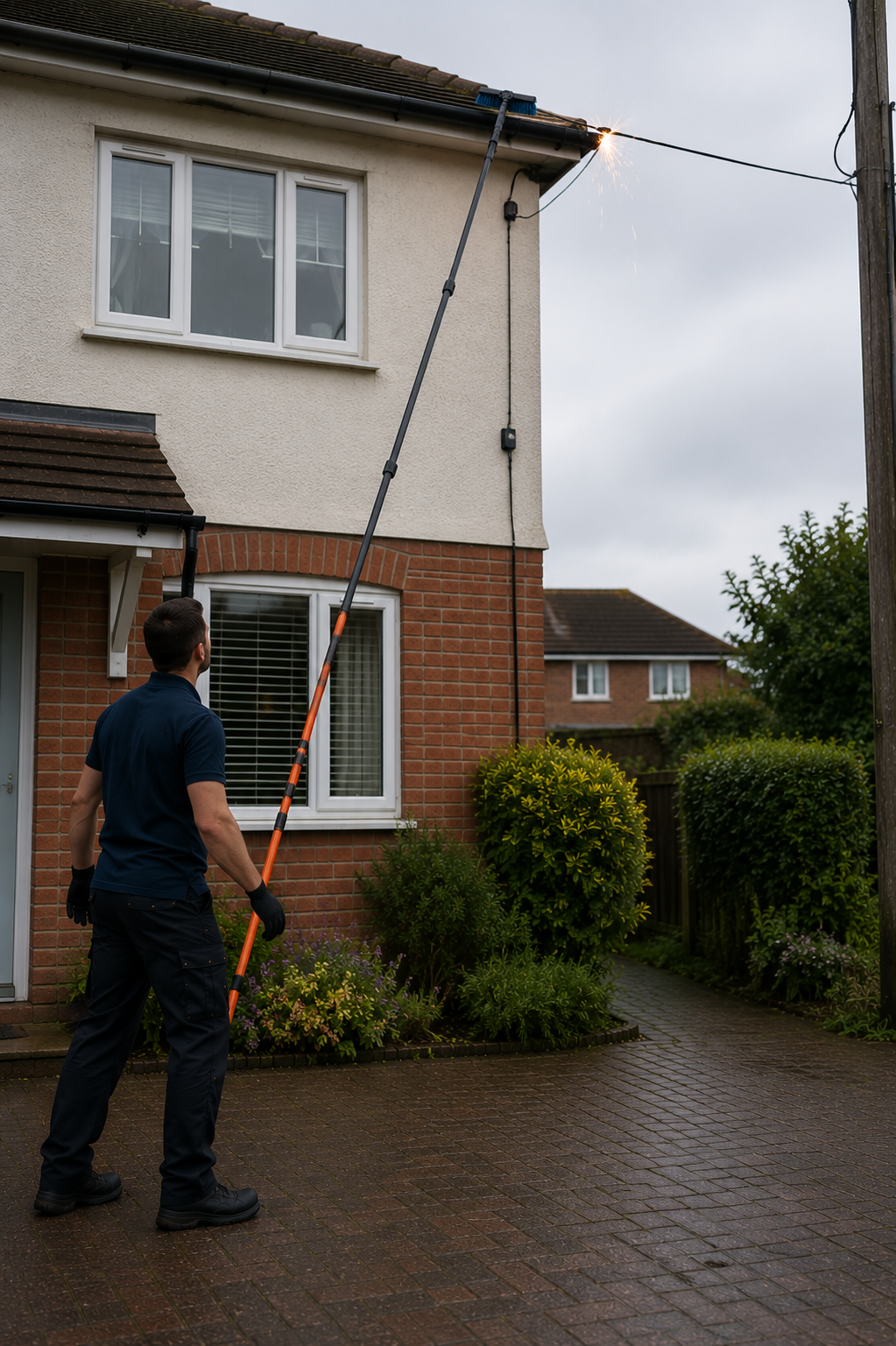
ASSUME IT IS LIVE. Even if the power seems to go off, it can come back on.
✓ Do not touch the pole, cable or anything touching it.
✓ Tell everyone to stay well away.
✓ Move away only if you can do so safely.
✓ Call 999 and say electricity is involved.
✓ Call 105 in Great Britain. In Northern Ireland, call 03457 643 643.
✓ Do not try to get the pole back until the power company says it is safe.
Step 14 – Look after your kit between jobs
✓ Check poles and van kit often.
✓ Service the kit as the maker says.
✓ Keep the water system clean.
✓ Make sure anyone using a pole knows how to spot power-line danger.
✓ If you work alone, make sure someone can get help to you if things go wrong.
✓ If something nearly goes wrong, learn from it. If the same problem keeps happening, change the way you work.

Quick job check – 15 things
✓ Van and kit safe.
✓ Park safely.
✓ Look up before the pole comes out.
✓ Walk around the whole job.
✓ Spot the dangers.
✓ Power cable nearby or not sure? STOP.
✓ Call 105 if you need help with a power line.
✓ Speak to the customer.
✓ Make the hose and work area safe.
✓ Use the lightest pole that safely reaches.
✓ Check the pole and kit.
✓ Keep good control while you work.
✓ If anything changes, stop and look again.
✓ Lower and pack away safely.
✓ Final check before you drive away.

NO JOB IS WORTH YOUR LIFE
If you cannot make the job safe, change it, put it off or walk away.
Research basis checked
The following primary/industry sources were checked when building this first draft. The finished public guidance should be rechecked immediately before publication in case any source has changed.
1. Federation of Window Cleaners (FWC) - Safety in Window Cleaning Using Water-fed Pole Systems, amended 31 March 2026. Source
2. Energy Networks Association (ENA) - Electrical Infrastructure Guidance for Window Cleaners, 8 May 2026 / Use of window cleaning equipment near overhead powerlines. Source
3. Health and Safety Executive (HSE) - GS6 (Fourth edition): Avoiding danger from overhead power lines. Source
4. Health and Safety Executive (HSE) - Working at height whilst window cleaning. Source
5. Health and Safety Executive (HSE) - Managing risks and risk assessment at work. Source
6. British Window Cleaning Academy (BWCA) - Safety publications - water-fed pole systems. Source
7. Department for Transport / GOV.UK - The Highway Code - waiting, parking and hazard warning lights. Source
8. Department for Transport / GOV.UK - Securing loads on HGVs and goods vehicles (includes vans and cars). Source
9. UK Government Prepare campaign - Power cuts - 105 in England, Scotland and Wales; Northern Ireland contact number. Source