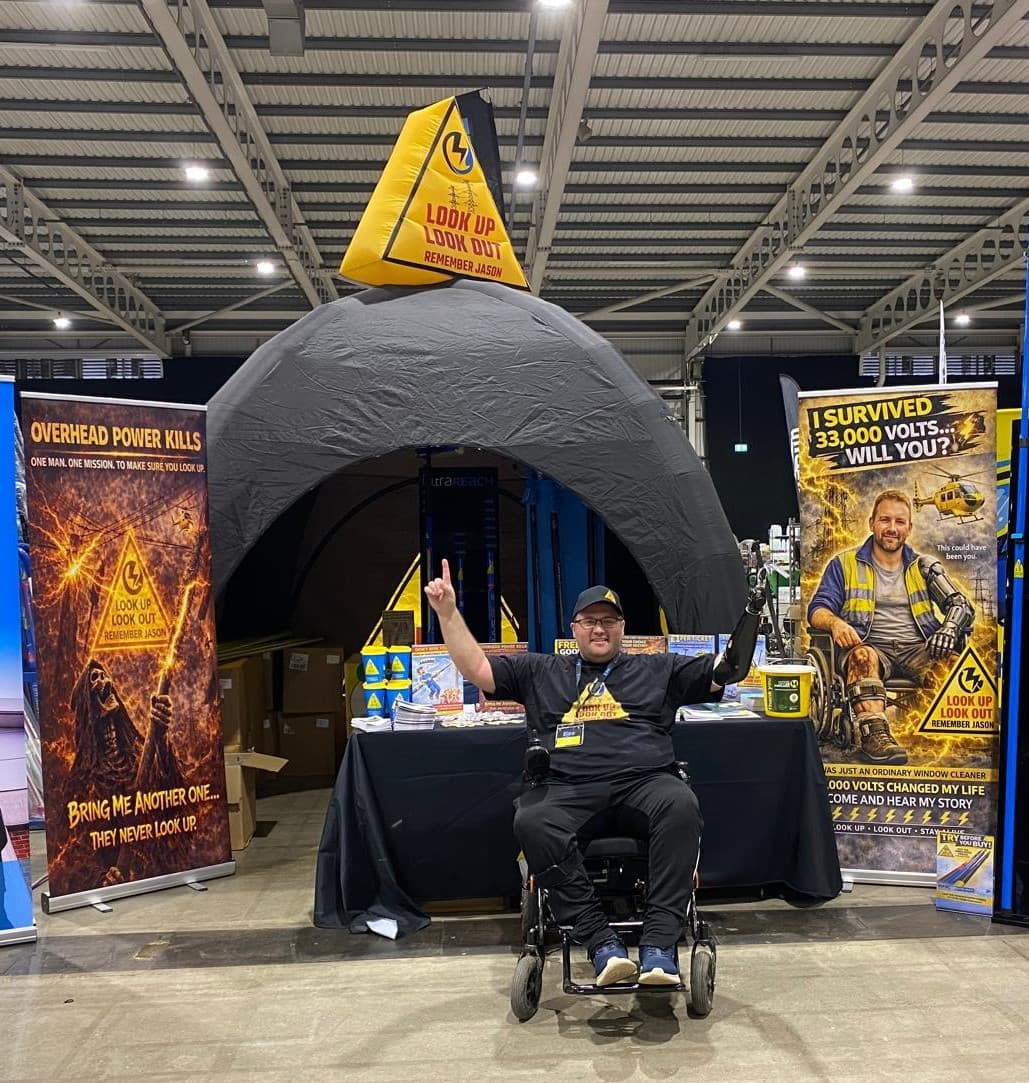
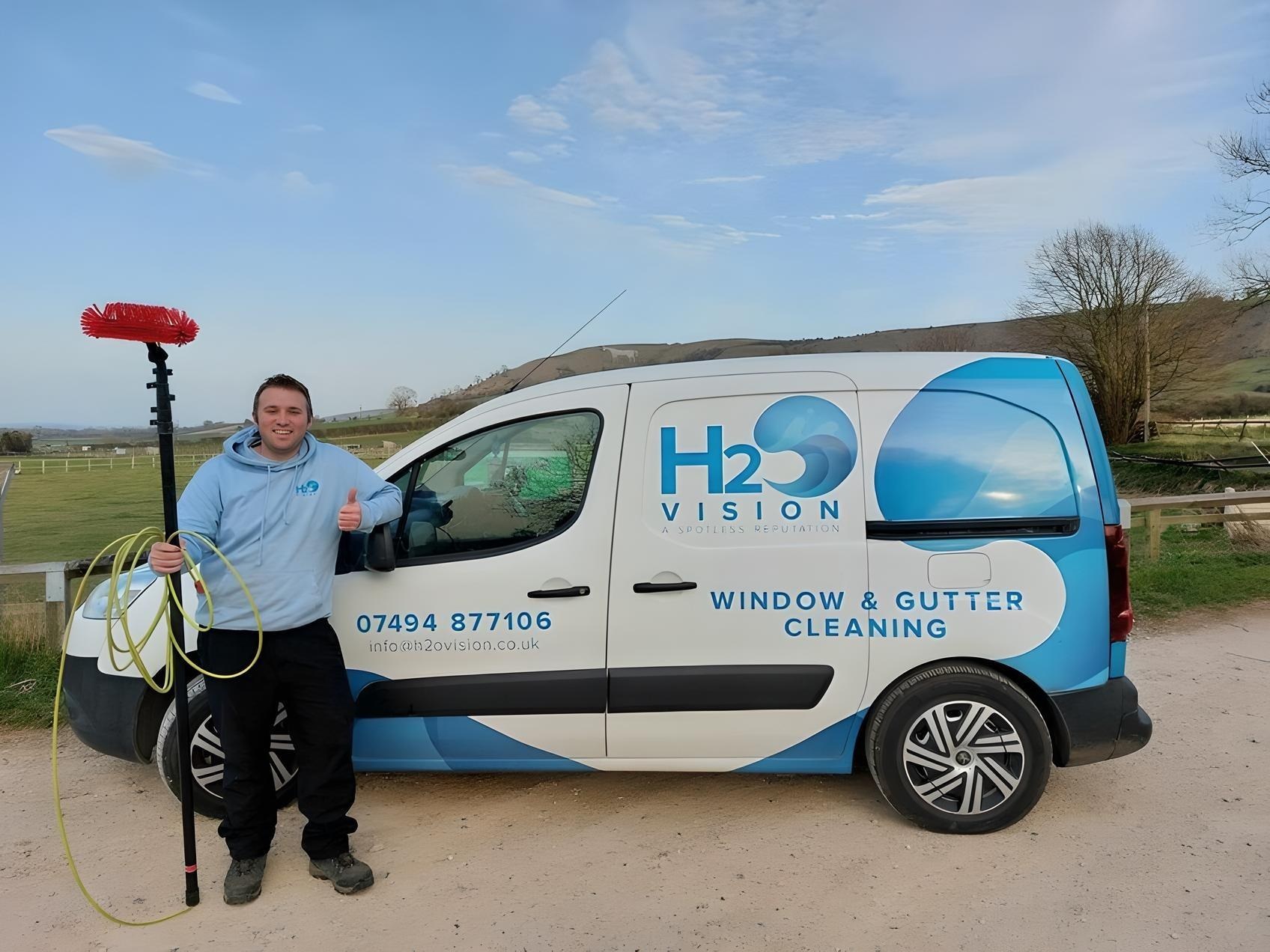
My name is John Knight. I am a retired window cleaner, and for years I did what thousands of window cleaners still do every day: turn up, look at the job, get the poles out, and crack on.
But I am also writing this as a father.
On 6 April 2024, my son Jason Knight, a self-employed window cleaner from Westbury in Wiltshire, was cleaning windows at a customer's property when his life changed forever.
Jason was working in a domestic back garden near overhead electricity lines. Neither Jason nor the homeowner understood at the time that those lines carried 33,000 volts. The pole did not have to touch the cable. The electricity arced from the overhead line to his water-fed pole and sent a powerful current through him.
Jason was thrown across the lawn. His shoes were blown off. Scorch marks were left in the grass. He later remembered waking up on the lawn, dazed, badly injured and believing he was going to die.
He managed to roll and crawl towards the conservatory wall, but he could not properly call for help or tap on the window. In those first moments after the shock, he was alone, seriously injured, and trying to survive.
Jason was airlifted to Southmead Hospital in Bristol, where doctors fought to save his life.
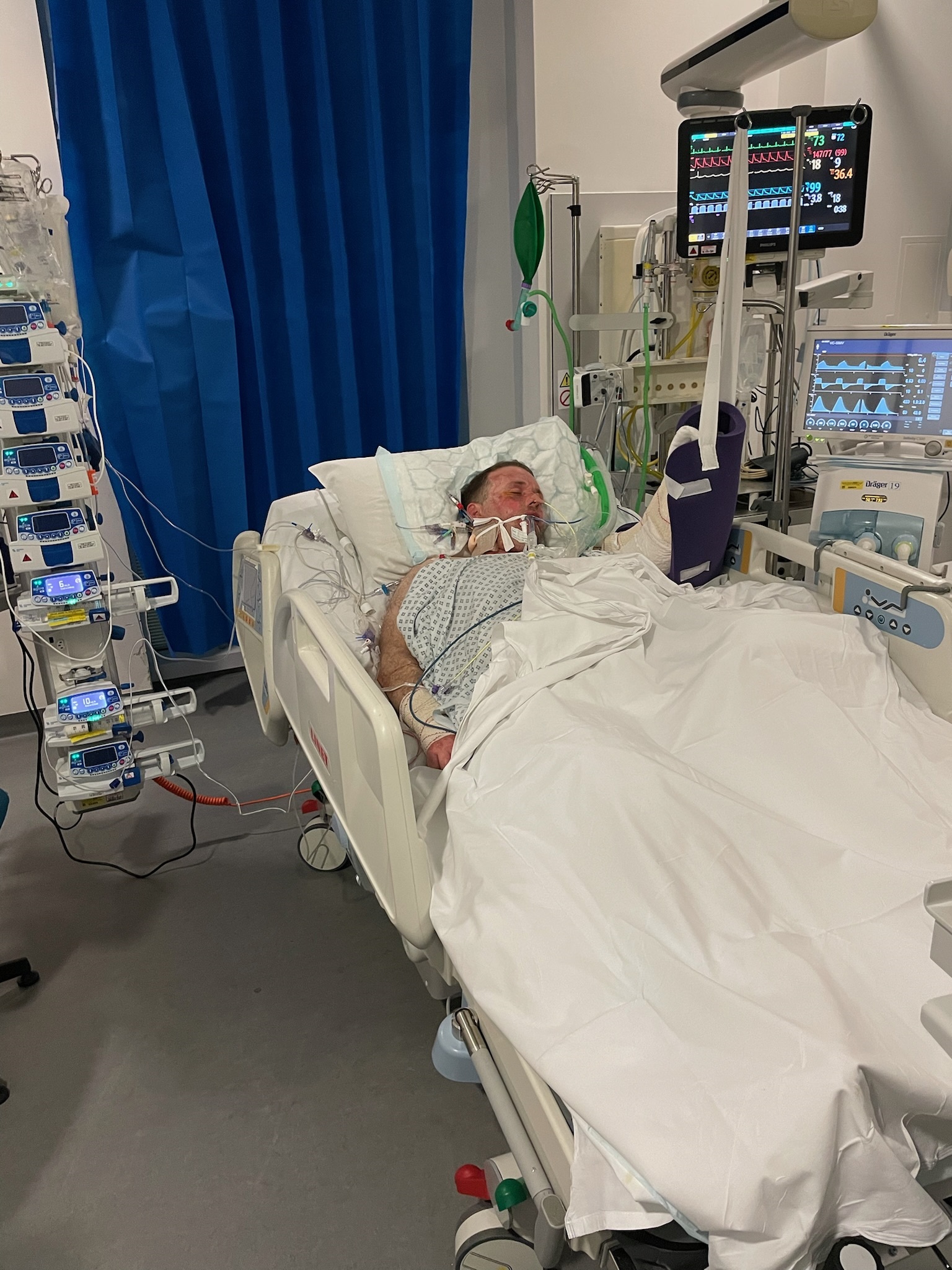
He survived, but only just.
Jason spent over four months in hospital. During that time, he underwent 22 operations, lost his left forearm, lost five toes, suffered severe damage to his legs, and had to begin the long and painful process of learning how to walk again.
But leaving hospital did not mean the end of the injury. It was the start of a new life that none of us would ever have chosen.
Jason still lives with the consequences every day. He still uses a mobility scooter. He still has to walk with aids. His eyesight has also been affected and is slowly deteriorating. He fights pain, depression, frustration and the daily reality of having his life changed in seconds.
But Jason is strong.
He is a husband, a father, a son, and a young man with extraordinary determination. His will is not only to keep going for his own family, but to stop this from happening to someone else.
Why insulation matters
Jason's accident shows why insulation on pole systems is not a minor detail.
Jason was using a water-fed pole with insulation on the lower section. While he was holding that insulated lower section, he had been working. The catastrophic electrocution happened when he reached up, released the clamp, and placed his hand onto the next section of the pole.
That detail is crucial.
The current travelled mainly down Jason's left side. Doctors explained to our family that it missed his heart. Had the current travelled differently, Jason would almost certainly not have survived.
The insulated lower section may be one of the reasons Jason is alive today. But the uninsulated section above it became the point that allowed the current to pass through him.
That is the uncomfortable lesson at the heart of this campaign:
- No insulation could have meant death.
- Partial insulation meant survival with catastrophic injury.
- Greater lower-section or more insulation may have prevented the current passing through Jason in the way it did.
This is why Look Up, Look Out believes the industry must come together to improve safety expectations around telescopic and water-fed pole systems.
Warnings matter. Training matters. Looking up matters.
But design matters too.
If insulation can reduce the chance of a fatal or life-changing injury, then the industry should be working together to raise expectations, improve transparency, test properly, explain claims clearly, and reduce the opportunity for this to happen again.
For declared pole comparisons and industry transparency guidance, see Cleaner's essential toolkit and Industry guidance: safety expectations, product claims and transparency.
The impact on the whole family
An electrocution does not end at the scene of the accident.
It follows the person home. It follows the family into hospitals, waiting rooms, operations, rehabilitation, financial pressure, sleepless nights, mental health struggles, and a completely different future from the one they expected.
Whether someone dies or survives, the consequences reach far beyond the person who was injured.
Families are left to pick up the pieces. Partners become carers. Children see a parent changed. Parents watch their child suffer. Everyone around them carries part of the weight.
As a family, we support Jason as best we can. But no family should have to live through this if better awareness, clearer warnings, improved design, and stronger safety expectations can help prevent it.
That is why this campaign matters.
A wider safety issue
Jason's accident was not simply a freak moment in isolation.
It exposed a danger that many people do not fully understand: overhead electricity can kill or seriously injure even without direct contact.
Electricity can jump, or flash over, from a power line to a nearby object such as a pole. The danger is not only touching the line. Getting too close can be enough.
Since Jason's accident, his case has become part of a wider safety conversation, including discussion in Parliament about window-cleaning safety, water-fed poles, standards, awareness, and the need to improve how these risks are addressed.
Jason's case has also helped raise serious questions about how the industry deals with pole insulation, testing claims, safety warnings, and product transparency.
But the risk is no longer limited to professional window cleaners. These tools are telescopic poles, and similar or the same poles are now being used far beyond the traditional window-cleaning trade.
Members of the public are buying them to clean solar panels, conservatory roofs and hard-to-reach areas around the home. Photographers may use pole-mounted cameras. Estate agents and surveyors may use poles to inspect roofs and gutters. People even use long poles with hooks or attachments to help put up Christmas lights and decorations.
That matters, because many of those people may have little or no training in overhead power-line risk. They may not understand flashover. They may not know what a safe distance looks like. They may not realise that a pole does not need to touch a cable for electricity to jump.
There is another concern too. Cheap telescopic poles and pole systems are openly sold through online platforms, including second-hand marketplaces and major e-commerce sites. Some imported or low-cost poles may have no declared insulation in the handle at all. In the wrong place, in the wrong hands, that can leave someone holding what is effectively a conductor near live overhead electricity.
Jason can see that danger because he has lived it. He knows how quickly an ordinary job can become a life-or-death emergency. He also knows that you cannot educate every household, every buyer, every online seller and every occasional pole user without a proper national safety campaign.
That is why he cannot just stand still and wait for the next tragedy. He has to act.
This campaign is not just about one accident.
It is about the next worker, the next family, the next ordinary job, the next cheap pole bought online, the next set of Christmas lights, the next roof inspection, the next solar-panel clean, and the next pole that goes up near overhead lines.
Jason has also chosen to give something back. After everything he has been through, he still wants his story to protect other people.
Giving back after being saved
Jason is not only campaigning for a safer future. He is also raising money for the people and organisations who helped save his life.
After his accident, Jason wanted to give something back to Wiltshire and Bath Air Ambulance and to Southmead Hospital Charity in Bristol, where the specialist teams treated him and helped put him back together again.
Through fundraising, Jason has already presented two cheques of £5,000 each: one to Wiltshire and Bath Air Ambulance and one to Southmead Hospital Charity. He has also raised a further £960 from the Expo to support the air ambulance, and he continues to plan further fundraising, including fishing competitions where the latest one in May 2026 raied over £1,000 again to help support the service that helped save him.
For Jason, fundraising gives purpose to pain. It is his way of saying thank you, but also his way of turning something devastating into something useful for the next person who needs urgent help.
He hopes that this site that he created will also give purpose to his pain, and will help to save lives.
In time, Jason also hopes to create something even wider: a support fund or academy for window cleaners and others in the trade who are injured, harmed, or suddenly pushed into hardship through unforeseen circumstances.
The idea is simple but powerful. Instead of support disappearing after one fundraiser, money could be held responsibly in a pot overseen by trustees, then used to help workers and families when life changes without warning.
That is Jason all over. He was nearly taken from us, but he is still looking for ways to help others.
Why Look Up, Look Out exists
Look Up, Look Out is not about blame.
It is about raising awareness across the whole industry, and beyond the industry, to help reduce the chance of this happening again.
As referenced in the Bible a Good Samaritan saw someone left for dead when others walked on by. He treated the man's wounds and ensured his care. In the same way, Jason saw the risk that others faced, he could have walked way but he didn't, instead he acted for the benefit of us all.
The campaign also exists to help break down the wall between what is being offered, what safety-related claims actually mean, what information is available, and what users need to understand before choosing or using equipment.
It is there to support both sides: the industry and the user.
For manufacturers, distributors, retailers and online sellers, it encourages clearer safety information, more transparent testing claims, better warnings, improved design thinking, and a shared commitment to raising safety expectations.
For users, employers and the public, it offers practical reminders, plain-English guidance, comparison information, and a simple message that could save a life:
Before the pole goes up, look up. Before the job starts, look out. If something does not feel safe, stop.
This campaign is not about attacking an industry I worked in myself. It is about helping that industry move forward, while giving users and the wider public the information they need to make safer decisions.
Jason is alive because the current missed his heart.
We fight every day because the next person may not be so lucky.
Every near-miss report, every shared warning, every clearer label, every safer design choice, every properly explained test claim, every platform seller that takes responsibility, and every person who looks up because of this campaign can help turn Jason's accident into something that protects someone else.
This site is free to use, free to share, and free forever.
It is Jason's gift.
Please use it. Share it. Talk about it. Put the logo on your website, van, email footer, training material, workplace noticeboard, product page, online listing, or anywhere it may remind someone to stop and look up.
Because one reminder at the right time could save a life.
Related on this site
- Before you start: look up, look out — practical overhead-line guidance
- Safety basics — incident context, carbon fibre, arcing, and calling 105
- Report a near miss
- Request shrouding
- Cleaner's essential toolkit — declared safety information and comparison charts
- Neil Moore's story — another survivor account