⏱️ Estimated reading time 7 minutes
📖 30-second summary
This page explains why responsibility for electrical safety should be shared across the whole supply chain. It outlines why manufacturers, suppliers, retailers, online marketplaces and users all have an important role in reducing the risk of overhead power line incidents. It also explains the legal and regulatory framework that supports clearer product information, better warnings and evidence-backed safety claims, helping users make safer, more informed decisions.
Campaign position: Look Up Look Out is not against consumers, manufacturers, retailers, distributors or any individual product. The campaign encourages clear claims, clear evidence, clearer explanations and safer decision-making. Users should be able to understand what safety-related claims mean, and responsible suppliers should have a fair opportunity to explain the basis and limits of those claims.
This guidance is general campaign information. It is not legal advice. It does not make findings about any individual company, manufacturer, distributor, retailer, product or product range.
Purpose of this page
This page explains why responsibility, duty of care and product safety transparency matter where telescopic poles, water-fed poles, gutter vacuum poles and similar high-reach systems may be used near overhead electrical hazards.
The purpose is not to accuse any company or product. The purpose is to encourage safer decision-making, clearer information and a better shared understanding of what users, suppliers, retailers and manufacturers may reasonably need to consider.
Why responsibility matters
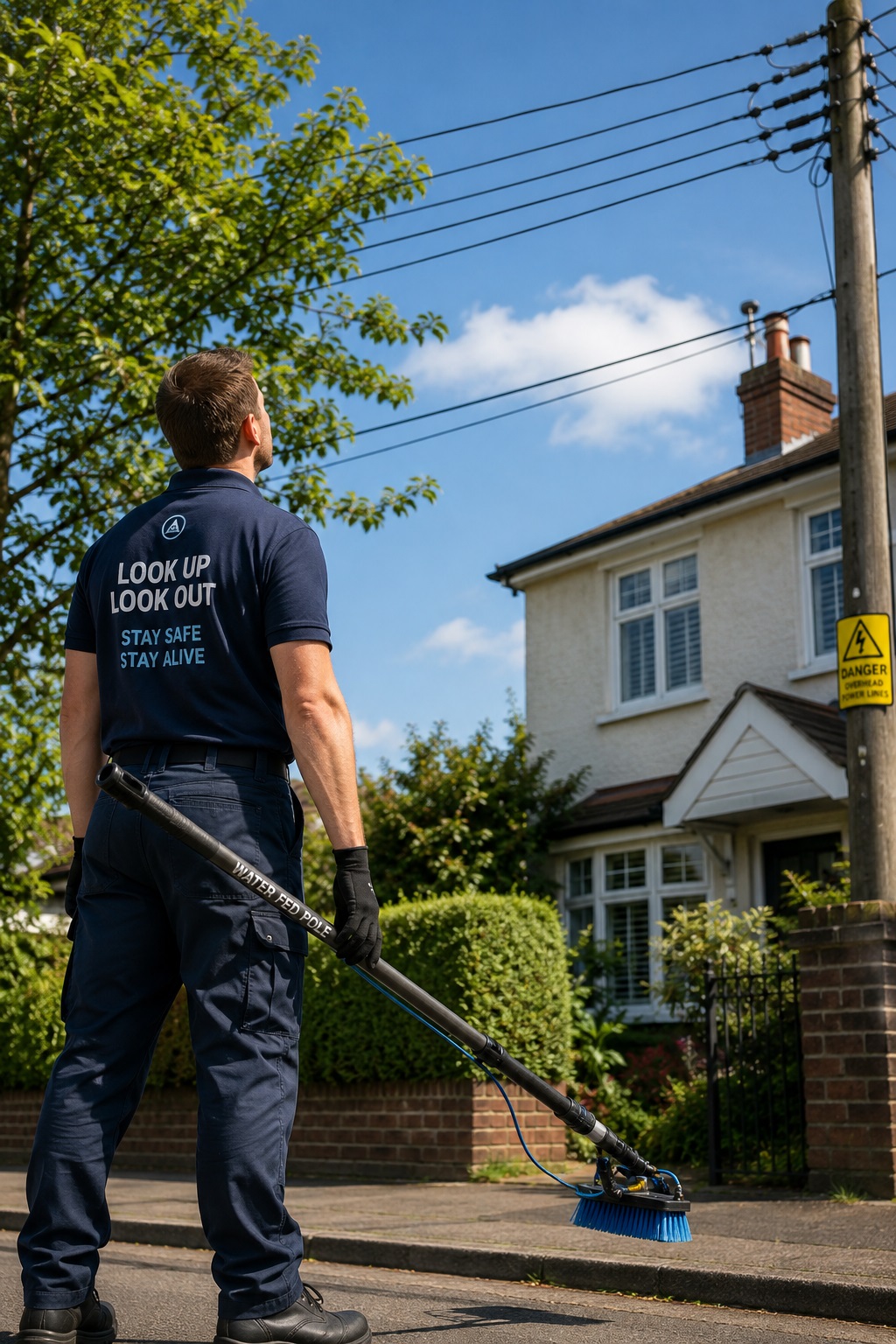
High-reach poles are widely used across the UK for window cleaning, exterior cleaning, gutter work, roof work, solar panel cleaning, maintenance and domestic tasks. Many are used safely every day. However, where long poles are used outdoors, overhead electricity may be a foreseeable hazard.
That means safety responsibility should not depend only on the user spotting every hazard in perfect conditions. Good safety practice considers real-world use, including poor visibility, weather, distractions, trees, buildings, fatigue, time pressure and lack of experience.
Product safety and foreseeable use
The 2026 Federation and HSE context
The 2026 Federation of Window Cleaners guidance, developed with input from the Health and Safety Executive and others, reinforces the importance of overhead electrical hazards when water-fed and other telescopic poles are used.
That guidance supports the campaign position that responsibility should not sit with the user alone. Product design, warnings, instructions, safety claims and supporting evidence all form part of the wider safety picture.
Where a supplier makes a claim of enhanced electrical safety, the Federation guidance also refers to obtaining a Certificate of Conformity for the pole offered. Look Up Look Out supports this principle of evidence-backed transparency.
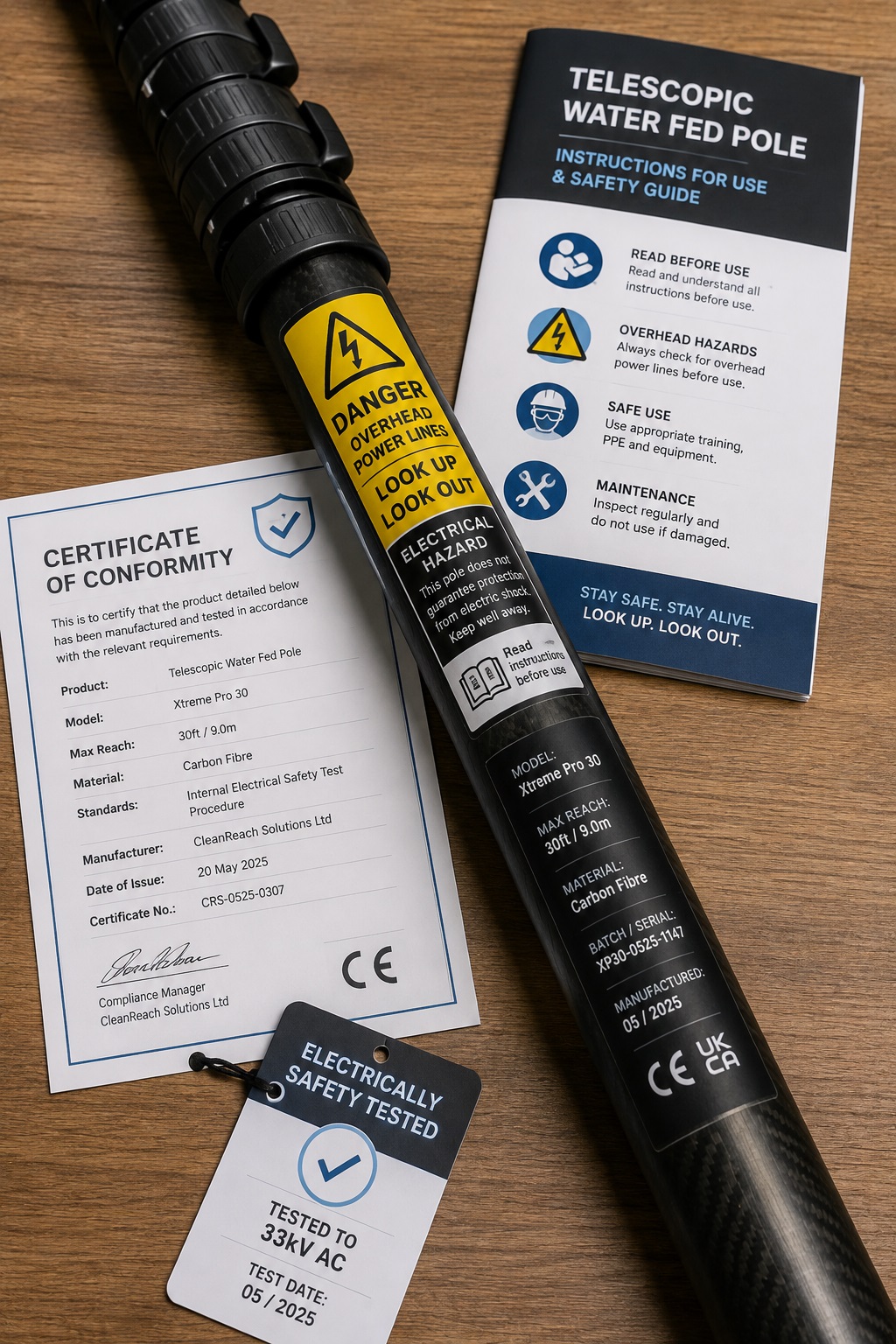
Where a product is likely to be used outdoors, at height, around buildings or near overhead service cables and power lines, the risk is not remote or imaginary. It is part of the environment in which the product may reasonably be used.
Suppliers and sellers should therefore consider whether product design, warnings, instructions, marketing wording and supporting evidence give users a fair and realistic understanding of the risk.
General Product Safety Regulations 2005
The General Product Safety Regulations 2005 remain an important part of the product-safety framework in Great Britain. They require producers to place only safe products on the market and to provide consumers with relevant information to assess risks where those risks are not immediately obvious.
For high-reach poles, this may be especially important because electrical hazards are not always obvious. Overhead lines may be partly hidden by trees, buildings or rooflines, and users may wrongly assume that a line is not dangerous or that direct contact is required before harm can occur.
Consumer Protection Act 1987
The Consumer Protection Act 1987 may also be relevant when considering whether a product provides the level of safety that persons generally are entitled to expect.
That assessment may include the way a product is presented, marked, labelled, warned about, instructed for use and supplied. Look Up Look Out does not make legal findings about individual products, but believes it is reasonable to ask whether high-reach poles used outdoors near foreseeable electrical hazards should carry stronger, clearer and more durable safety information.
Misleading omissions and product presentation
Safety information should not be hidden, delayed or presented in a way that leaves buyers with a false impression. Where important safety information could affect a buyer’s decision to purchase or use a product, it should be available clearly and early enough to matter.
This is particularly important for online listings, where the buyer may rely on product images, reach height, material descriptions, short marketing phrases and price. If a product is conductive, partly conductive or has no declared insulation information, that matters. If a product is described as insulated, anti-conductive, voltage tested or electrically safer, that also matters.
Articles supplied for use at work
Where telescopic poles, water-fed poles, gutter vacuum poles or similar equipment are supplied for work use, duties relating to articles supplied for use at work may also be relevant.
The practical concern is simple: if a pole is supplied for work use and may reasonably be used outdoors around buildings and overhead electrical hazards, then clear safety information, appropriate warnings, product instructions and any claimed safety evidence should be treated seriously.
Online marketplace responsibility
Online marketplaces have made long poles easier to buy than ever before. That creates a wider public-safety concern because many buyers may have no training, no site-risk assessment process and no understanding of overhead-line flashover risk.
Where long poles are sold for outdoor use, overhead-line danger should be visible before purchase. Where no insulation information is declared, that should not be hidden behind vague marketing language. Where electrical-safety claims are made, the evidence and limitations should be clear.
Future product safety reform
The UK product-safety framework is continuing to develop. Look Up Look Out welcomes serious discussion about stronger product-safety duties, clearer online marketplace responsibility, better warnings, improved traceability and stronger action where unsafe products may be placed on the market.
A practical duty message
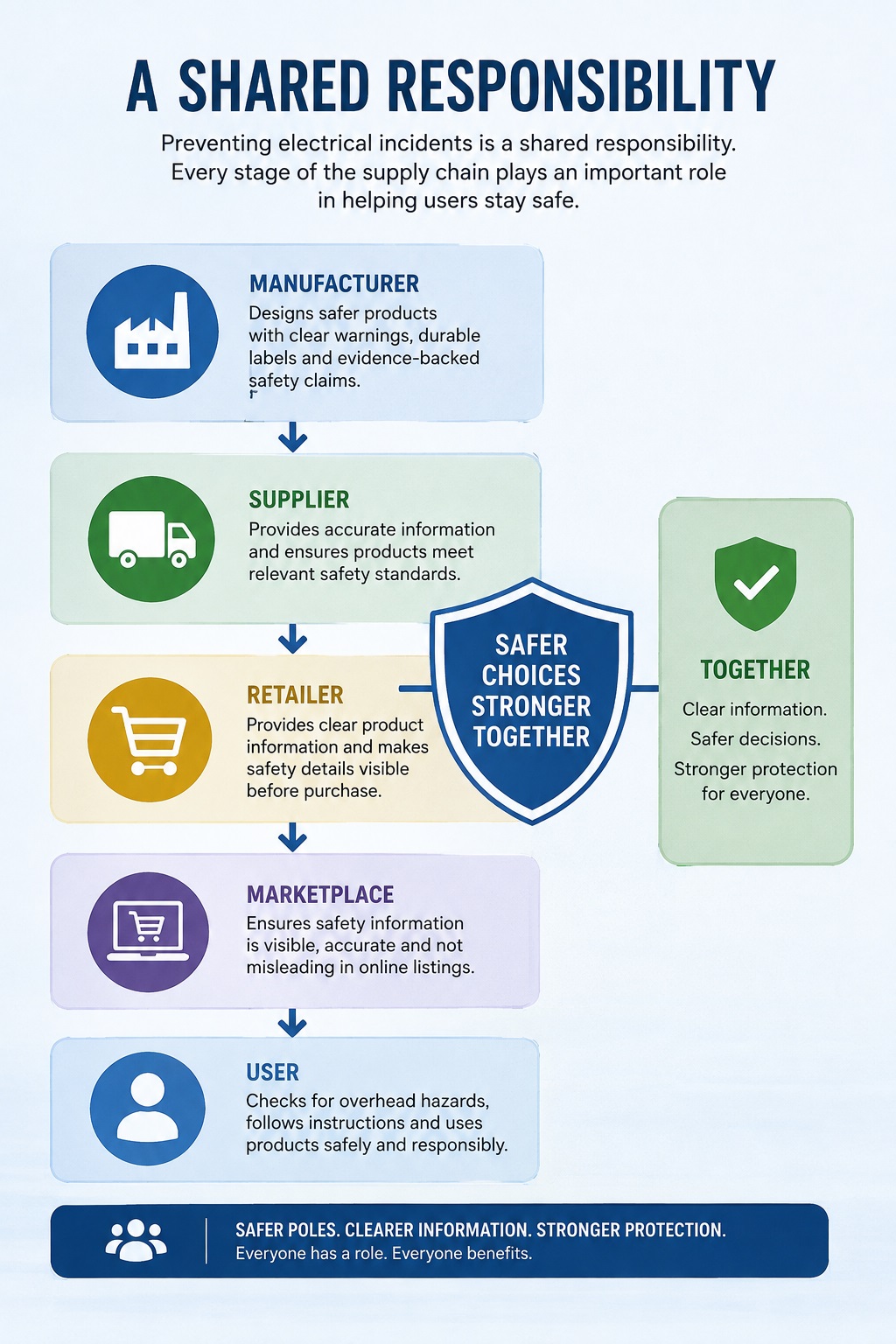
- Users should not assume a product is electrically safer unless the claim is explained and supported. Suppliers should explain safety-related claims clearly and fairly.
Retailers and marketplaces should make serious electrical-risk information visible before purchase.
Manufacturers should consider warning durability, product design, foreseeable use and the limits of any safety claims.
Everyone in the supply chain has a shared interest in preventing avoidable incidents involving poles and overhead electricity
 .
.
Relevant UK frameworks referred to in this guidance
- General Product Safety Regulations 2005.
- Consumer Protection Act 1987.
- Consumer Protection from Unfair Trading Regulations 2008.
- Health and Safety at Work etc. Act 1974, including duties relating to articles supplied for use at work.
- Advertising standards principles requiring objective claims to be capable of substantiation.
- British Standards context, including the current absence of a dedicated UK electrical-insulation standard specifically written for telescopic or water-fed cleaning poles.
- Product safety reform discussions concerning modern online markets and product traceability. Note: This page is intended to explain responsibility and safety transparency principles in plain English. It should not be treated as formal legal advice.