Ground Pressure Washing Safety
Reading time: about 9 minutes
Summary
A practical, easy-read guide to safer ground-level pressure washing of paths, patios and driveways.
It takes you through the job from start to finish: parking and setting up safely, checking the work area, planning where dirty water will go, keeping mains electricity away from water, using and testing an RCD safety switch, choosing the right pressure and nozzle, using chemicals safely, controlling the jet, protecting people and pets, and packing away safely.
The key message is simple: plan the job before you pull the trigger. Keep electricity away from water, use the lowest pressure that will do the job, keep people and animals away from the jet, and never work on a leak or change a nozzle while the system is under pressure.
If you cannot control the electricity, the jet, the people or the dirty water, do not start.
No job is worth your life.
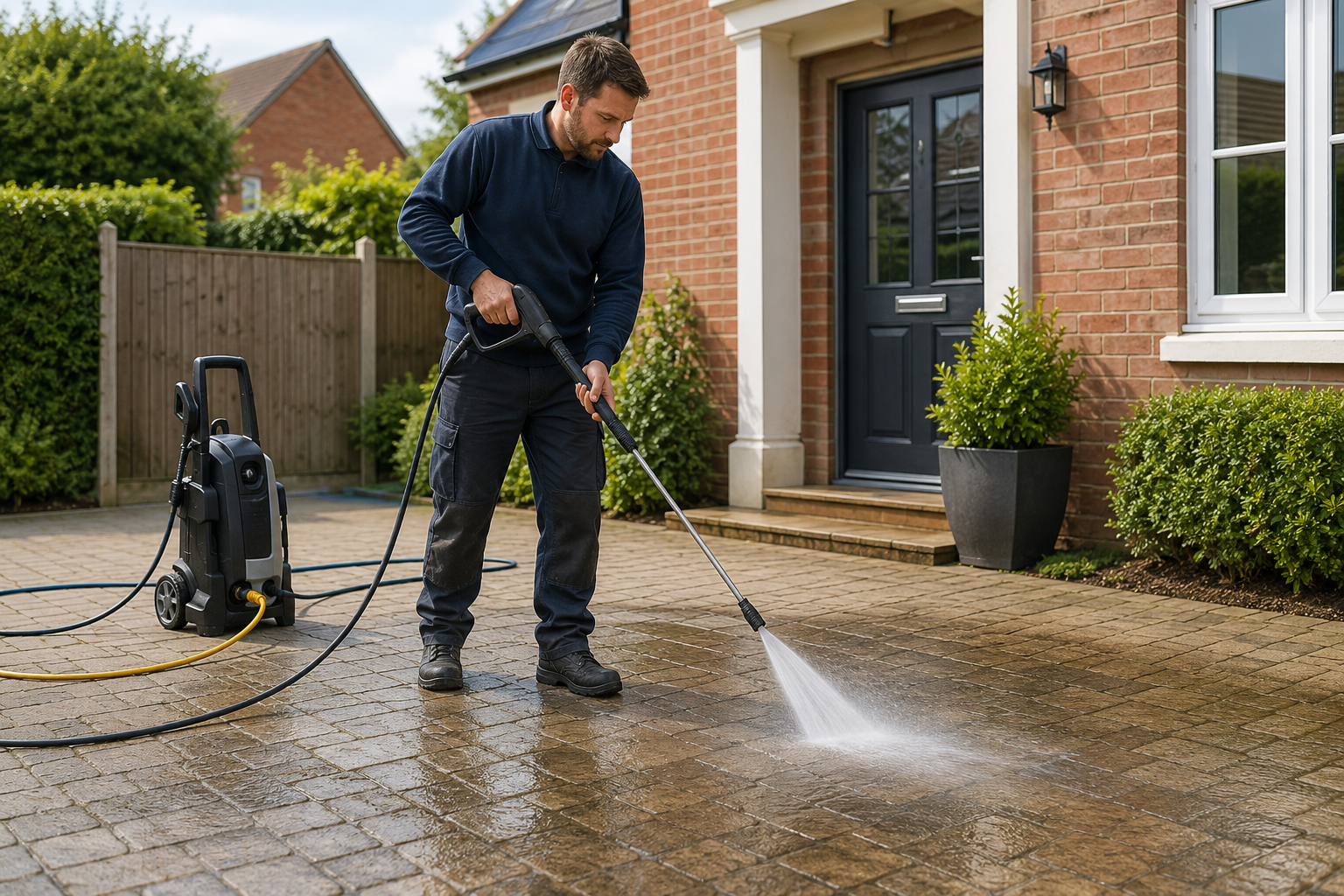
Short, clear steps for pressure washing paths, patios and driveways
Park safely. Walk the whole job before setting up. Find out where dirty water will go. Keep mains electricity away from water. Use and test an RCD safety switch. Keep people and pets out of the work area. Use the lowest pressure that will do the job. Never point the jet at a person or animal. Stop and switch off before fixing leaks or changing parts. If anything changes, stop and look again.
This is the easy-read version. It uses short steps and plain words so it is quick to understand and use on the job. It covers ground-level pressure washing only. It does not cover roof cleaning or work at height.
Step 1 – Before you leave for the job
✓ Make sure the pressure washer, hoses, cable reel, tools and other kit are fixed down safely in the van.
✓ Do not put too much weight in the van.
✓ Check the machine has been looked after and is fit to use.
✓ Take the right lance, nozzle and surface-cleaning tool for the job.
✓ Check plugs, cables, extension leads and the RCD safety switch before you leave.
✓ If you may use a chemical, take the product label, safety sheet and the right gloves and eye protection.
✓ Check the weather before you go.
Step 2 – Park and unload safely
✓ Park where it is legal and safe.
✓ Do not block pavements, dropped kerbs, drives or gates.
✓ Try to unload from the side away from moving traffic.
✓ Choose a firm, flat place for the pressure washer.
✓ If the job is beside a busy road or public path, make sure you can keep people safe before you start.
✓ If another parking place is safer, move the van.
A cone or hazard lights do not make bad parking safe.
Step 3 – Walk the whole job before you set up
✓ Look at the surface you are going to clean.
✓ Find all drains and work out where the dirty water will run.
✓ Look for outdoor sockets, lights, electric gates, chargers, pond pumps and other electrical kit.
✓ Look for loose paving, cracked concrete, weak pointing, loose stones or damaged edges.
✓ Look for cars, windows, doors, painted walls, timber and anything that could be damaged by spray or flying dirt.
✓ Look at where customers, children, pets, neighbours and delivery drivers may walk.
✓ Check slopes and low spots where water may collect.
✓ Look for bird mess, animal waste, oil, paint or other dirt that may need a different way of cleaning.
Step 4 – Do your safety check
Ask yourself what could go wrong before the trigger is pulled.
✓ Could water reach plugs, cables or other electrical kit?
✓ Could the jet hit a person or animal?
✓ Could stones or dirt fly into someone's face, a car or a window?
✓ Could the hose, cable or wet ground make someone trip or slip?
✓ Could the pressure damage the surface?
✓ Could dirty water or chemicals run into the wrong drain?
✓ Could the job be done with lower pressure or a safer tool?
✓ Are you tired or struggling to control the lance?
Can you make the job safe? If not, stop. Change the way you do it, get help or walk away.
Step 5 – Work out where the dirty water will go
Do this before you switch the machine on.
✓ Find out which drains carry rainwater away.
✓ Do not let dirty wash water, soap or chemicals run into a rainwater drain or stream.
✓ Sweep up loose leaves, moss, weeds, grit and rubbish before washing where you can.
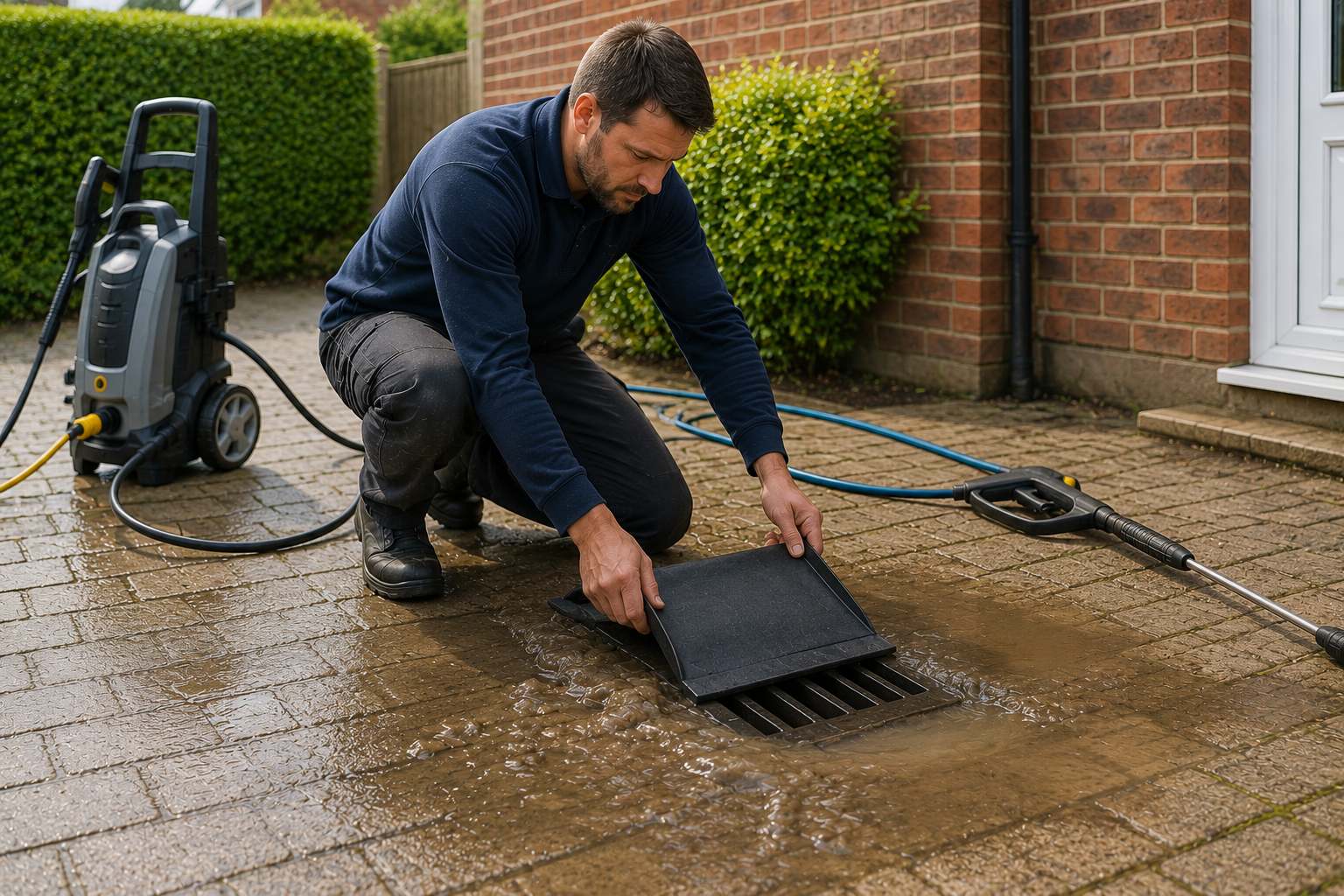
✓ Cover or block a drain if dirty water could run into it.
✓ Use a wet vacuum, pump, drain cover or other safe way to catch dirty water if needed.
✓ If you do not know where a drain goes, do not guess.
✓ If you take dirty water or sludge away, get rid of it the right way.
Even if a cleaning product says it breaks down naturally, dirty water still cannot go down any drain.
Step 6 – Set up the mains power safely
This guide is for a 230/240V mains pressure washer.
✓ Make sure the machine is made for a normal 230/240V mains supply.
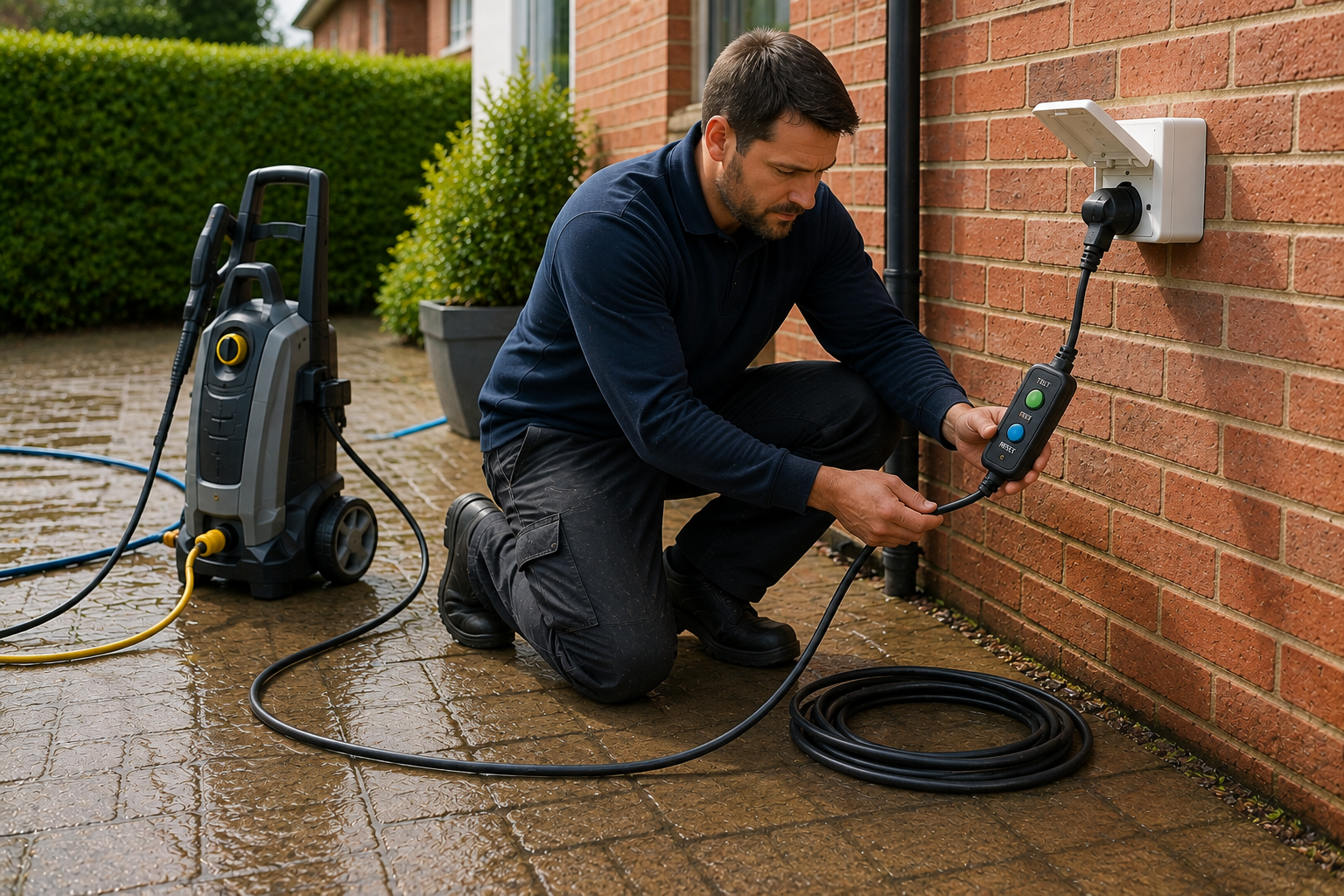
✓ Use a 30 mA RCD safety switch.
✓ Test the RCD before you start. If it trips, stop and find out why before you turn it back on.
✓ Check the plug, socket and cable for cuts, loose parts, burn marks or water damage.
✓ Keep plugs and cable joints out of the wet work area.
✓ Keep the power cable where it is least likely to be sprayed, run over, crushed or cut.
✓ Do not point the jet at sockets, lights, chargers, cables or other live electrical kit.
✓ If the customer's power supply looks wrong or you are not sure about it, do not use it.
Water and mains electricity do not mix. If the electrical setup does not look safe, do not start.
Step 7 – Speak to the customer and clear the area
✓ Make sure you both know what is being cleaned.
✓ Ask about drains, weak surfaces, recent repairs and any known electrical problems.
✓ Move cars, furniture, toys, plant pots and other loose items away.
✓ Close doors and windows if spray could get inside.
✓ Keep children, pets, customers and passers-by out of the work area.
✓ If you may use a chemical, explain where people and pets must keep away.
Step 8 – Set up the washer, hoses and work area
✓ Put the pressure washer on firm, flat ground.
✓ Keep the machine away from standing water and heavy spray.
✓ Keep the high-pressure hose away from sharp edges and moving cars.
✓ Keep the water hose and power cable where people are least likely to trip.
✓ Use barriers where you really need to stop people entering the work area.
✓ Protect drains before washing starts, not after dirty water is already running away.
Step 9 – Set up the water supply
✓ Use clean hose and fittings that are in good condition.
✓ Make sure the tap gives enough water for the machine.
✓ Do not let dirty water or chemical mix get back into the tap water supply.
✓ If chemicals are fed through the system, follow the machine and chemical maker's instructions.
Step 10 – Pick the right pressure and nozzle
More pressure is not always better.
✓ Start with the lowest pressure that should do the job.
✓ Use the right nozzle for the machine.
✓ Use a wider spray or surface cleaner where it can do the job safely.
✓ Take extra care on soft stone, old pointing, timber, paint, jointing sand and damaged paving.
✓ Do not fit home-made or wrong-sized nozzles.
✓ Do not tie the trigger open or stop the safety parts from working.
If lower pressure or another tool will do the job, use it.
Step 11 – Check the kit before you pull the trigger
✓ Machine – steady, no bad leaks or damage.
✓ High-pressure hose – no cuts, bulges, bad wear or damage.
✓ Gun and lance – trigger works and parts are secure.
✓ Nozzle – fitted properly.
✓ Water hose – secure and not kinked.
✓ Plug, cable and RCD – look safe and RCD tested.
✓ Drains and dirty-water controls – ready.
✓ People and pets – outside the work area.
✓ If anything looks wrong, do not start the machine.
Step 12 – Test a small patch first
✓ Pick a small area where possible.
✓ Start with lower pressure and a safe distance.
✓ Check the surface is not being damaged.
✓ Watch for flying dirt and spray.
✓ Check where the dirty water is going.
✓ Only carry on when the result looks safe.
Step 13 – If you use a chemical or soft-wash product
Do not guess the mix.
✓ Ask first if the chemical is really needed.
✓ Read the label and the safety sheet.
✓ Use the amount and mix stated by the product maker.
✓ Use the gloves, eye protection and other kit the product says you need.
✓ Keep chemicals in marked containers. Never use a drinks bottle.
✓ Do not mix products unless the label says it is safe.
✓ Keep chemicals away from people, pets, plants, cars, metal, paint and open windows as needed.
✓ Do not spray if wind is blowing the mist where you cannot control it.
✓ Do not let chemical wash water run into a rainwater drain or stream.
NEVER mix a bleach-type cleaner with acid. It can make dangerous chlorine gas.
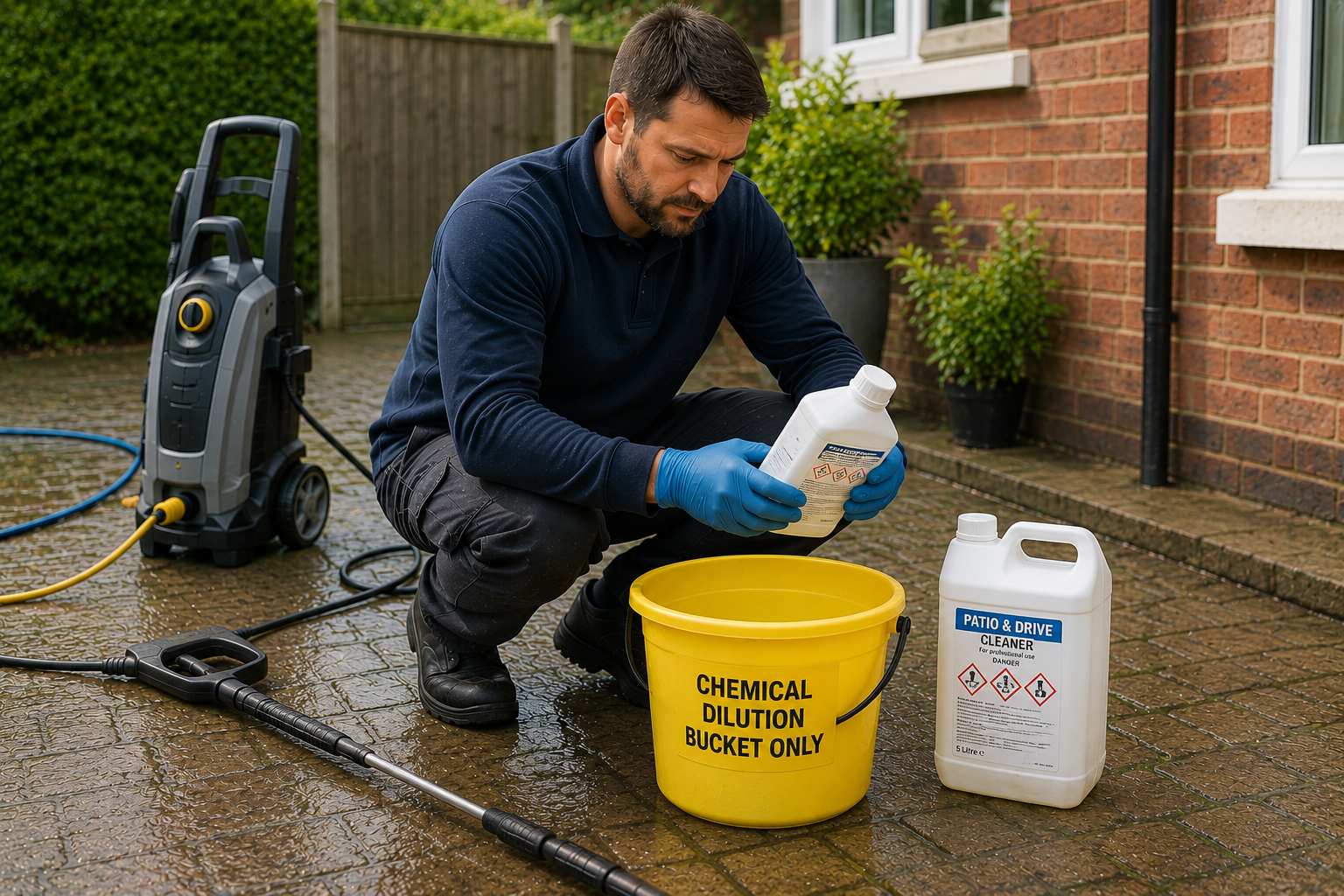
Step 14 – Wear the right safety kit
✓ Wear eye or face protection against spray and flying dirt.
✓ Wear footwear with good grip for wet ground.
✓ Wear gloves that suit the job.
✓ If a chemical is used, wear the protection stated on its label and safety sheet.
✓ Use hearing or breathing protection if the job needs it.
Step 15 – Pressure wash safely
✓ Stand steady before you pull the trigger.
✓ Keep a firm grip on the gun and lance.
✓ Never point the jet at yourself, another person or an animal.
✓ Keep the nozzle away from your feet and legs.
✓ Keep the jet away from electrical kit.
✓ Push dirt into the safe area, not towards people, cars, windows or the road.
✓ Watch the hose behind you.
✓ Do not walk backwards without looking.
✓ Do not leave a live gun or lance on its own.
✓ If you need to move the machine or change the setup, stop and make it safe first.
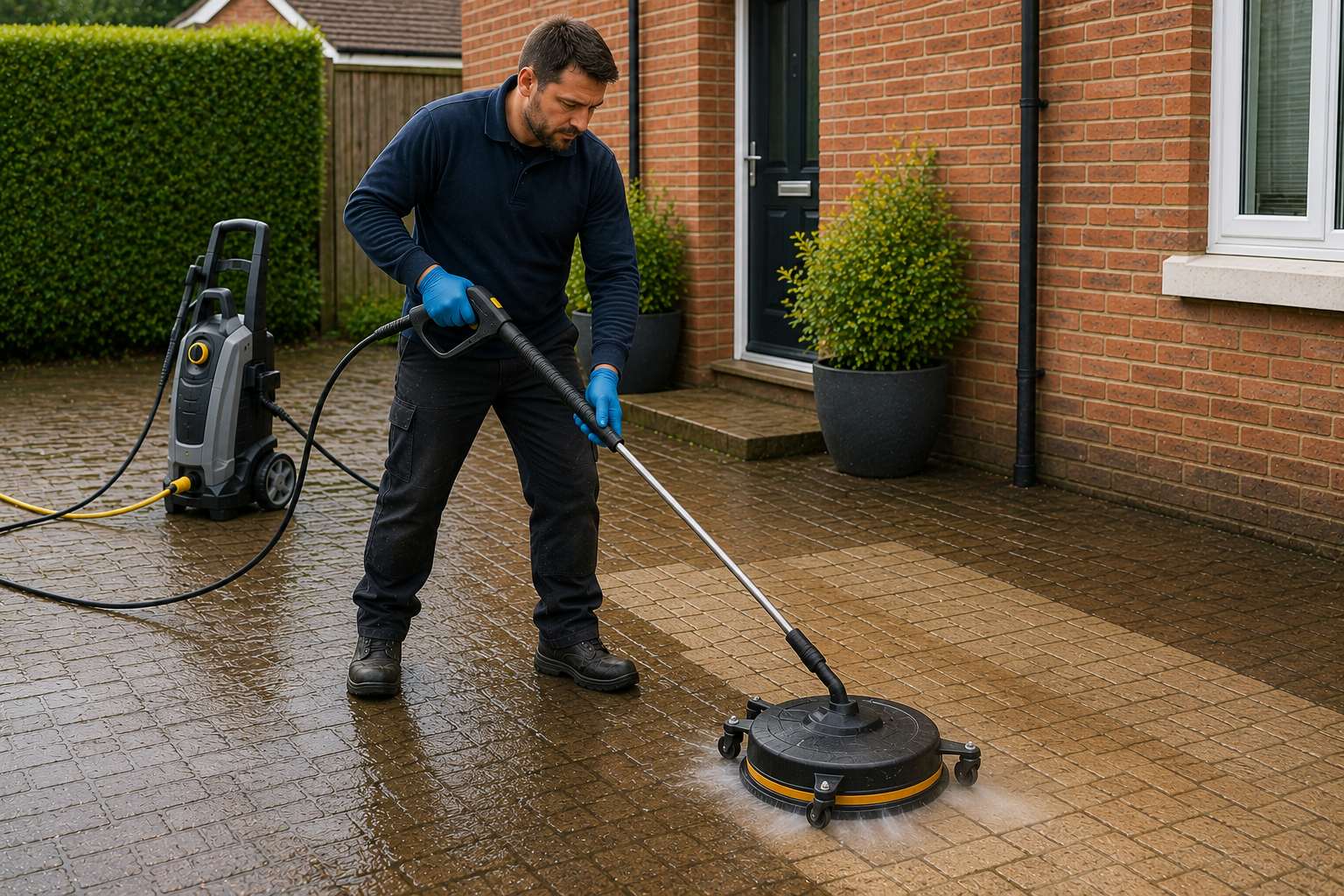
Step 16 – Keep dirty water and slips under control
✓ Pick up moss, weeds, grit and sludge as you work.
✓ Do not let dirty water build up and escape into the road or wrong drain.
✓ Keep people out of wet, slippery areas.
✓ If water starts going somewhere you did not plan, stop washing and get it back under control.
✓ If chemicals are in the water, treat it as dirty chemical water.
✓ Do not leave muddy or soapy water where bikes, cars or people could slip.
Step 17 – Leak, blockage or nozzle change? STOP FIRST
Never tighten a high-pressure joint or change a nozzle while the system is under pressure.
✓ Let go of the trigger and switch the machine off.
✓ Unplug it if the job needs the power fully off.
✓ Turn the water off if needed.
✓ Release the pressure the way the machine maker tells you.
✓ Do not feel for a tiny hose leak with your hand.
✓ Do not tape up a leaking high-pressure hose and carry on.
✓ Use the right replacement parts.
✓ If the RCD trips, the plug gets hot or the cable gets wet or damaged, stop and find out why before restarting.
Step 18 – If anything changes, STOP and look again
✓ A child, pet, neighbour or delivery driver comes into the work area.
✓ Wind changes where the spray is going.
✓ Thunder or lightning starts.
✓ Dirty water reaches a drain you did not mean it to reach.
✓ The surface starts breaking up.
✓ You find oil, paint, animal waste or other unexpected dirt.
✓ You get tired and lose good control of the lance.
Stop. Make it safe. Work out what changed before you start again.
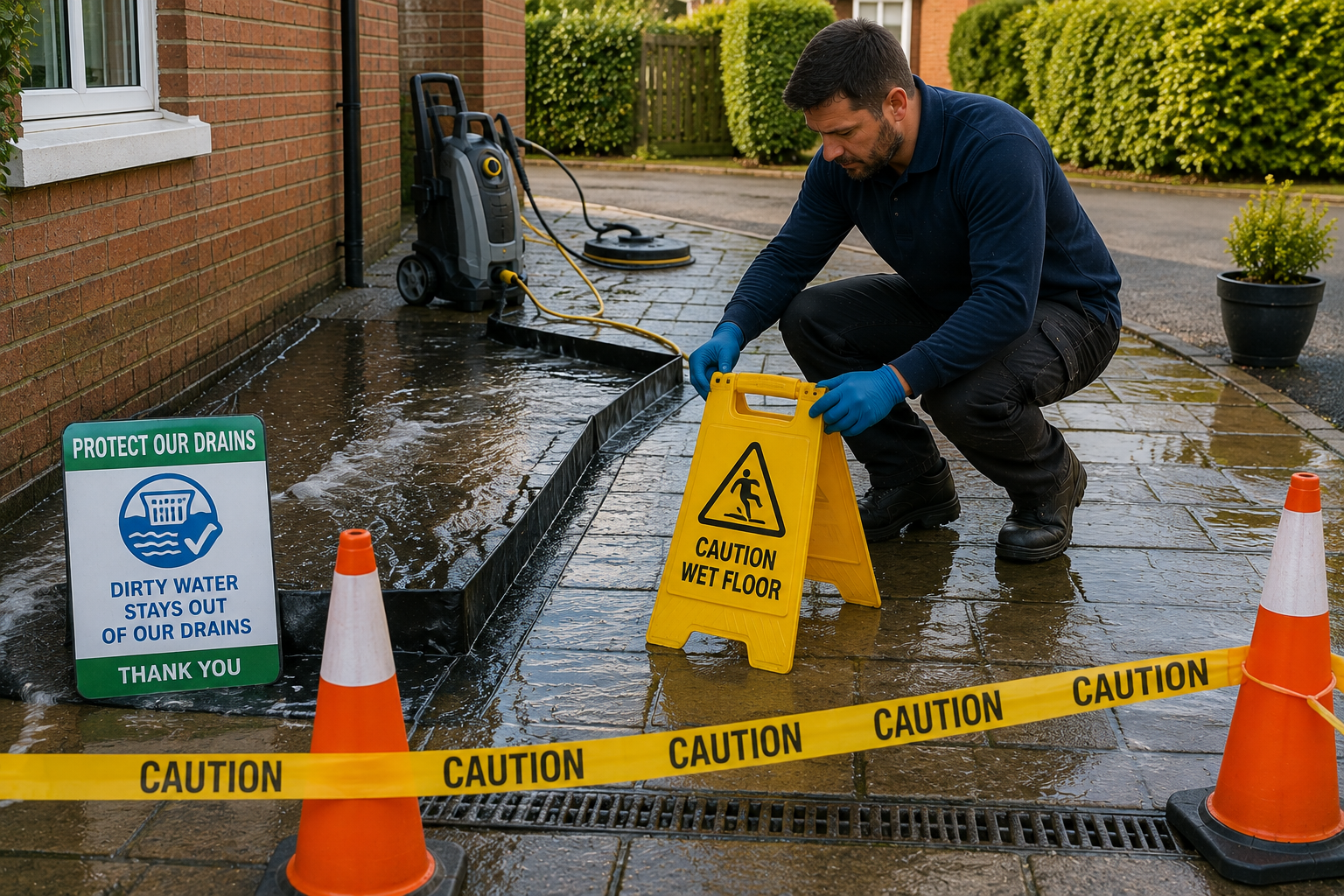
Step 19 – Deal with waste properly
✓ Collect moss, weeds, sand, grit, paint flakes and sludge.
✓ Do not wash the waste back into a rainwater drain.
✓ If the customer is keeping normal waste, leave it in the agreed safe place.
✓ If you take waste away, get rid of it the right way.
✓ If waste has oil, chemicals or something dangerous in it, do not mix it with normal waste.

Step 20 – Pack away and leave safely
✓ Keep dirty water under control until the job is finished.
✓ Switch off and release the pressure before taking hoses or tools apart.
✓ Keep your hands and plugs away from wet ground when packing the cable.
✓ Check the hose, gun, nozzle, cable and plug for new damage.
✓ Pick up moss, grit and rubbish.
✓ Take drain covers and barriers away only when the area is safe.
✓ Leave paths and pavements safe to walk on.
✓ Fix the washer, hoses, chemicals and waste down safely in the van.
✓ Before you drive away, check for people, bikes and traffic.
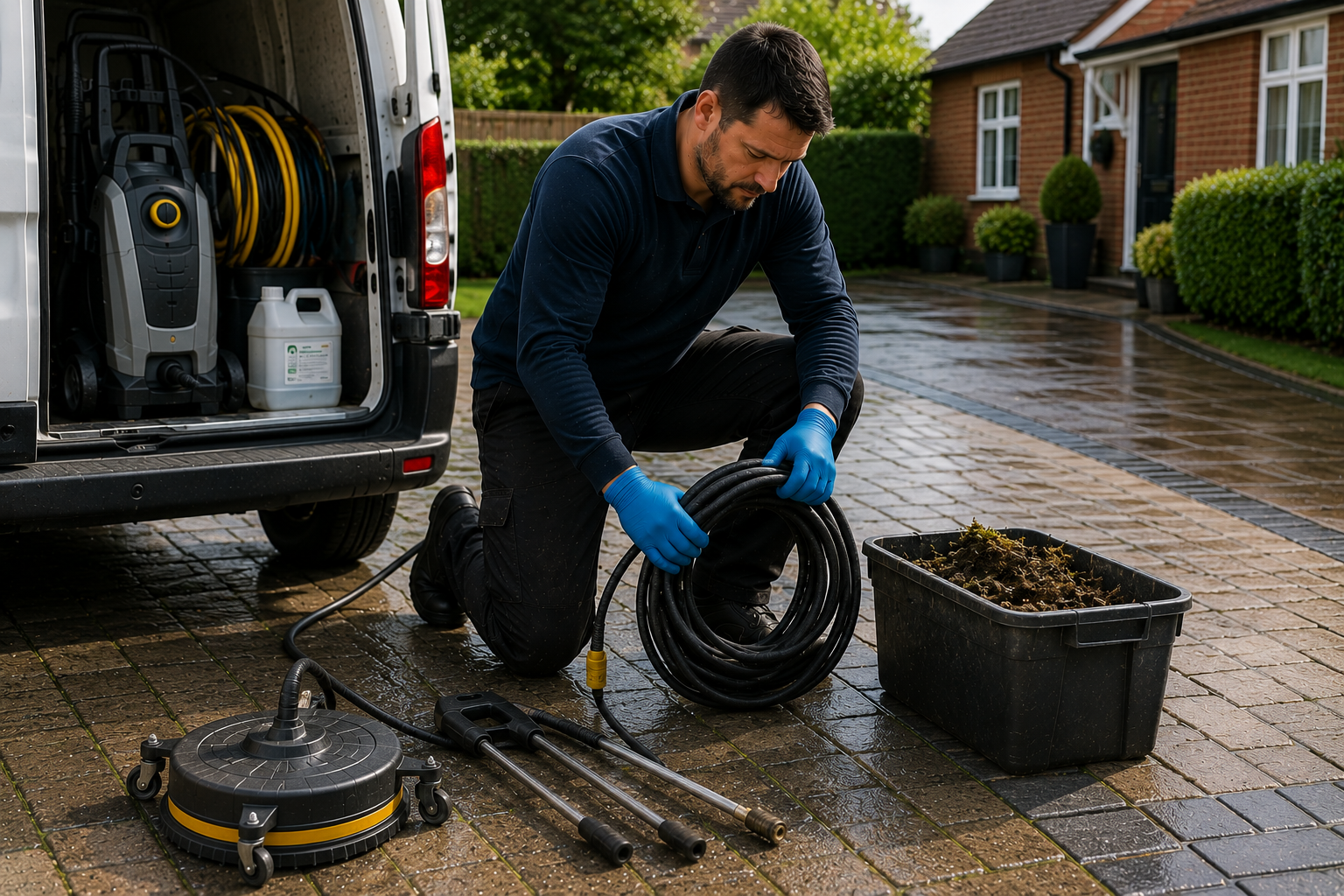
Step 21 – If someone is hurt by the pressure jet
A pressure jet can force water deep under the skin. A tiny mark can still be a serious injury.
✓ Stop the machine and make the area safe.
✓ Get urgent hospital help for any injury where water or fluid may have been forced under the skin.
✓ Call 999 for serious injury.
✓ Tell medical staff it was a HIGH-PRESSURE WATER OR FLUID INJURY.
✓ Tell them if soap, chemical or dirty water was in the jet.
Electric shock
✓ Do not touch the person if they may still be touching live electricity.
✓ Turn the power off only if you can do it safely.
✓ Call 999 for a serious shock, collapse or burn.
✓ Do not use the machine again until the electrical fault has been fixed.
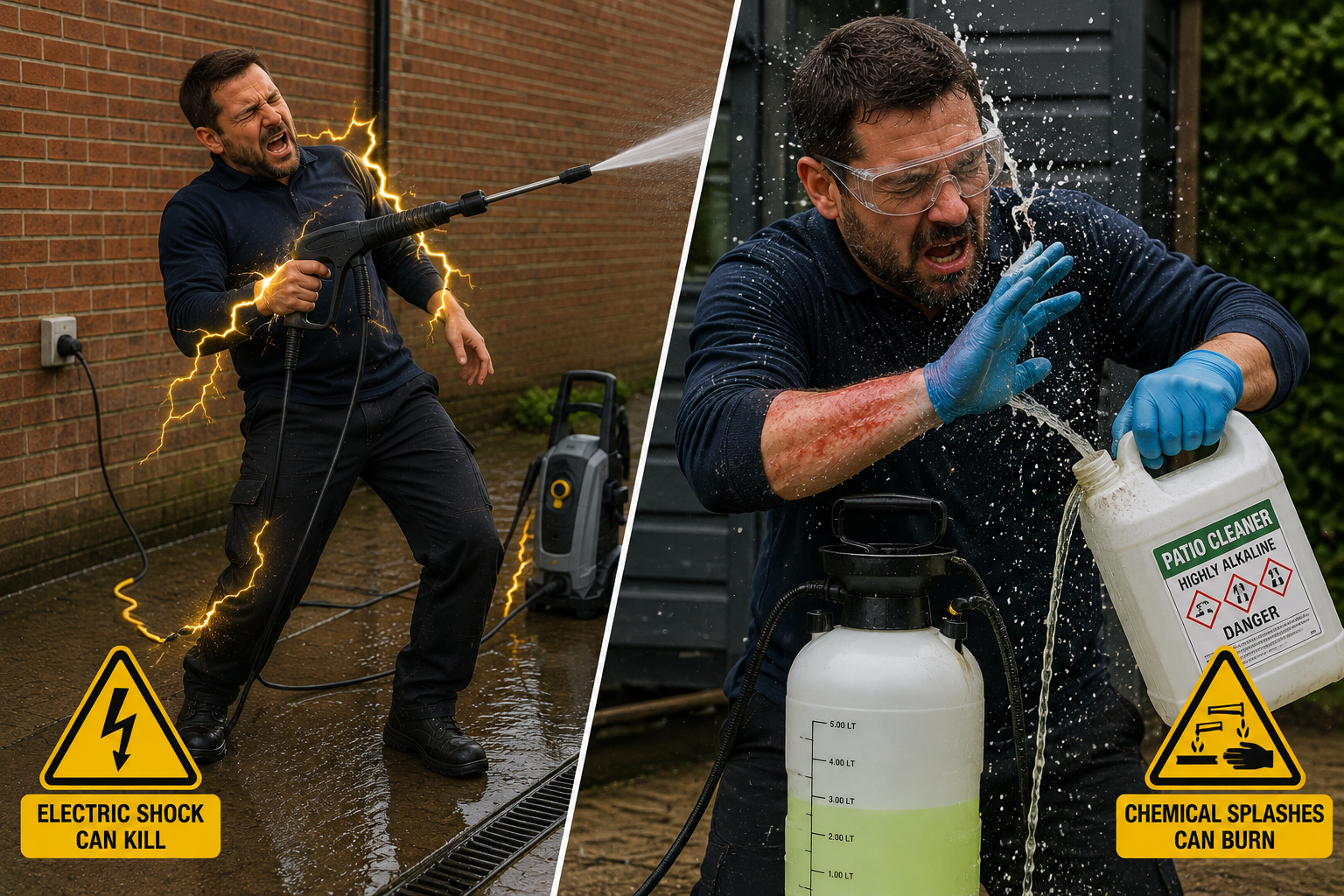
Chemical splash or fumes
✓ Follow the product label and safety sheet.
✓ Use clean water to rinse skin or eyes if the product instructions tell you to.
✓ Move people to fresh air if bad fumes are made.
✓ Call 999 for serious breathing trouble or serious chemical injury.
Step 22 – Look after the kit between jobs
✓ Check and service the pressure washer, gun, lance and high-pressure hose as needed.
✓ Check electrical kit often enough for the way it is used.
✓ Make sure anyone using the machine knows how to control the jet, mains power, dirty water and chemicals.
✓ If you work alone, make sure someone can get help to you if things go wrong.
✓ If something nearly goes wrong, learn from it.
✓ Keep the machine maker's instructions easy to find.

Quick job check – 20 things
✓ Van, machine and kit safe.
✓ Park and unload safely.
✓ Walk the whole site.
✓ Find the drains and plan where dirty water will go.
✓ Spot power, jet, people, slip, surface and chemical dangers.
✓ Use and test a 30 mA RCD.
✓ Move or protect cars, windows and customer items.
✓ Keep people and pets out.
✓ Put the washer on firm, flat ground.
✓ Make the cable and hose routes safe.
✓ Protect rainwater drains before washing.
✓ Use the lowest pressure that will do the job.
✓ Check the machine, gun, hose, nozzle, plug and cable.
✓ Test a small patch first.
✓ Using chemicals? Read the label and safety sheet. Never mix unsafe products.
✓ Keep the jet away from people, animals and electrical kit.
✓ Keep dirty water and slip risks under control.
✓ Leak or nozzle change? Switch off and release pressure first.
✓ Pressure-jet injury? Get urgent hospital help.
✓ Deal with waste, pack away and leave the area safe.

NO JOB IS WORTH YOUR LIFE.
If you cannot control the electricity, the jet, the people or the dirty water, do not start.
Research basis checked.
Primary and industry sources checked for this first draft. The final public wording should be rechecked immediately before publication because guidance, product rules and environmental requirements can change.
- Health and Safety Executive (HSE) - Electrical risks from steam/water pressure cleaners - PM29. Source
- Health and Safety Executive (HSE) - Work using electrically powered equipment - supply suitability, inspections and 30 mA RCD guidance. Source
- Health and Safety Executive (HSE) - COSHH and cleaners - chemical exposure, skin/eye risk and controls. Source
- Health and Safety Executive (HSE) - How to carry out a COSHH risk assessment. Source
- Health and Safety Executive (HSE) - Biocides regulation, supply and use. Source
- Health and Safety Executive (HSE) - Disinfectants - current hypochlorite / incompatible chemical reaction guidance. Source
- Health and Safety Executive (HSE) - Using the right type of PPE. Source
- Health and Safety Executive (HSE) - PUWER overview - safe and suitable work equipment. Source
- Health and Safety Executive (HSE) - Harmful microorganisms / bird-contamination guidance - high-pressure washing can create contaminated airborne droplets. Source
- Water Jetting Association (WJA) - 2026 unified Black Code of Practice page - pressure washing, chemical pressure washing, rotary floor washing, guns/nozzles, hoses, waste and drainage. Source
- Water Jetting Association (WJA) - Water Jetting Injury Treatment Algorithm, 2026. Source
- Water Jetting Association (WJA) - Jetting lance foot injury safety alert, July 2026. Source
- Environment Agency / GOV.UK - Pollution prevention for businesses - contaminated water, surface-water drains and foul sewer. Source
- Environment Agency / DEFRA / GOV.UK - Waste duty of care code of practice. Source
- GOV.UK - Discharges to surface water and groundwater / trade effluent consent. Source
- GOV.UK - Dispose of business or commercial waste - waste-carrier registration rules. Source
- Water Regs UK - Backflow protection / Water Fittings Regulations guidance. Source
- Department for Transport / GOV.UK - The Highway Code - waiting, parking and hazard warning lights. Source