Sophie our AI Says "A Lighter Pole May Save Your Shoulders However The Wrong Pole May Cost You Everything"

When people hear the words "electric shock," many imagine something quick, painful and frightening.
But a high-voltage incident involving an overhead power line is not simply a shock.
It can be a whole-body trauma.
After hearing the stories of Jason Knight, Neil Moore, and others affected by overhead line incidents, I wanted to look more closely at what actually happens to the human body when someone is exposed to electricity from overhead lines, service cables, or high-voltage equipment.
The truth is brutal, but people need to understand it.
This is not about frightening people for the sake of it.
It is about explaining why the Look Up Look Out message matters so much.
Because by the time a person realises they are in danger, it may already be too late.
This is not a tickle.
This is not "just a shock."
This can be life or death.
And if you survive, you may survive with injuries that change the rest of your life.
You do not always have to touch the line
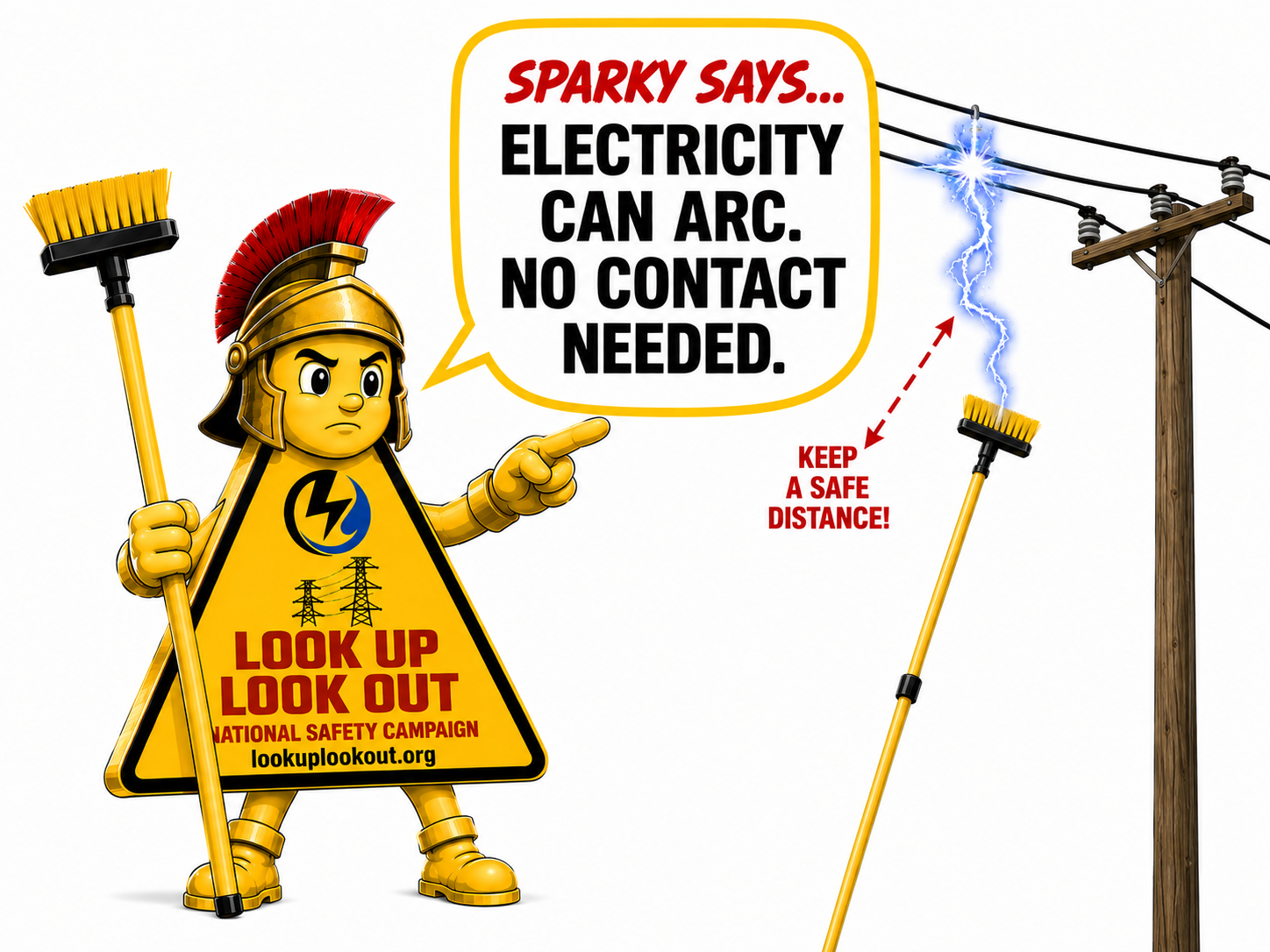
One of the most important things to understand is that electricity does not always need direct contact.
With overhead power lines, electricity can arc or jump across a gap. This is known as flashover.
That means a pole, ladder, tool, machine, branch, jet of water or other object may not need to physically touch the line before a serious or fatal incident occurs.
If something gets close enough, electricity may find a path.
And if a person is holding that object, their body may become part of that path.
You do not need to touch the line to be killed by it.
That is why overhead power lines must always be treated as live and dangerous.
11,000 volts and 33,000 volts are both life-threatening
People sometimes focus on the number.
Was it 11,000 volts?
Was it 33,000 volts?
Was one worse than the other?
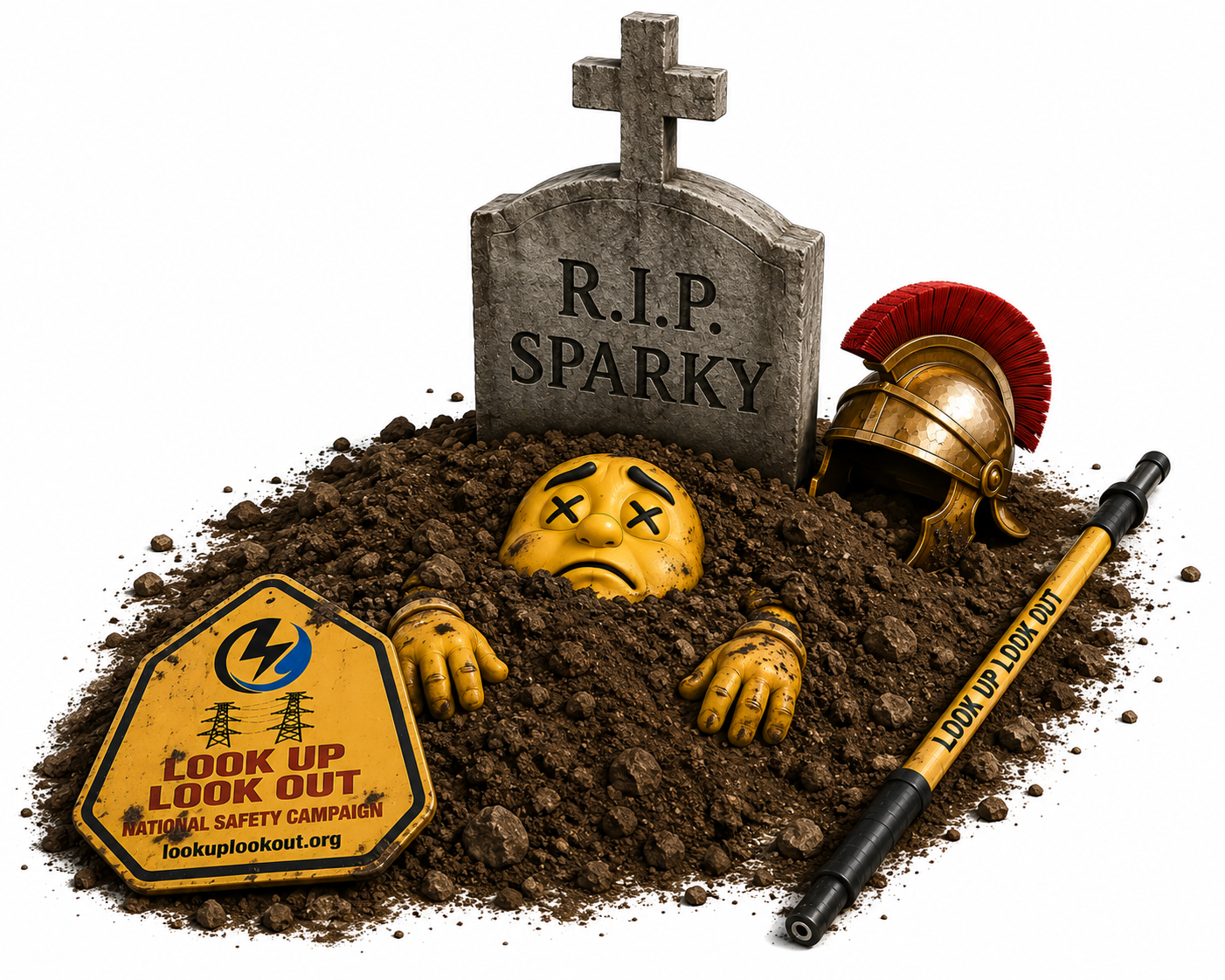
The honest answer is that both are extremely dangerous and both can kill.
The outcome depends on several things, including:
· the voltage involved
· the current that passes through the body
· the route the current takes
· how long the current flows
· whether the person can let go
· whether the skin is wet or dry
· footwear and ground conditions
· whether the person falls
· whether there is an arc or flashover
· how quickly emergency help arrives
But there is no safe version of this.
At these voltages, the body can suffer catastrophic injury in a fraction of a second.
"Only 230 volts" is not safe either
Another dangerous misunderstanding is the idea that domestic service cables are somehow low-risk because they are not 11,000V or 33,000V lines.
That thinking is wrong.
A domestic electricity supply may be around 230 volts, often still casually called 240 volts.
That is not harmless.
Normal mains electricity can kill.
Many domestic supplies are protected by main fuses rated at 60, 80 or 100 amps.
That does not mean 100 amps will automatically pass through a person. The current through the body depends on the route, contact, resistance, wetness and time.
But it does mean the supply is capable of delivering far more energy than the human body can safely withstand.
The human heart does not need 100 amps to be put into danger.
Dangerous effects can occur at much smaller currents.
So please do not ever dismiss a domestic cable with the words:
"It's only 240 volts."
There is no "only" when electricity enters the body.
Entry and exit burns
When electricity enters the body, it may leave an entry burn.
When it leaves the body, it may leave exit burns.
These marks can sometimes look smaller than people expect, but that can be misleading.
Electrical injuries can damage tissue deep beneath the skin. Muscles, blood vessels, nerves, tendons and other internal structures may be injured even if the surface burns do not show the full damage.
That is one of the cruel dangers of electrical injury.
The outside of the body may not tell the full story.
The body can become locked on
During an electrical injury, muscles can contract violently.
A person may not be able to let go of the pole, tool or object they are holding.
This can make the injury worse because the electrical contact may continue for longer.
Survivors often describe the feeling as violent, rigid, burning, freezing, crushing or impossible to control.
It is not a normal shock.
It is the body being overwhelmed.

The heart can be affected
Electricity can interfere with the heart's rhythm.
This can cause abnormal heart rhythms, collapse, cardiac arrest or sudden death.
Even if someone survives the initial incident, they may still need urgent medical assessment, ECG monitoring and hospital observation.
Heart rhythm problems are one of the reasons high-voltage electrical injuries should always be treated as a medical emergency.
Breathing can be affected
Electrical injury can also affect breathing.
A person may collapse. Their muscles may be affected. The shock, burns, heart rhythm disturbance, fall, pain or internal injury may all contribute to breathing difficulty.
Survivors may describe tightness, weakness, confusion, exhaustion or difficulty breathing after the incident.
Again, this shows why an overhead line incident is not just a surface injury.
It can affect the whole body.
Muscle damage and CK levels
One of the major medical concerns after serious electrical injury is muscle damage.
When muscle tissue is damaged, it can release substances into the bloodstream.
One of the blood markers doctors monitor is called CK, or creatine kinase.
CK levels rise when muscle has been injured.
After an electrical injury, doctors may check CK levels repeatedly to see whether muscle breakdown is continuing and whether the kidneys may be at risk.
This condition is called rhabdomyolysis.
It can happen after electrical burns, crush injuries, severe trauma and other major muscle injuries.
Why the kidneys are at risk
When damaged muscle breaks down, it can release a protein called myoglobin into the bloodstream.
Myoglobin can be harmful to the kidneys.
If enough muscle damage has occurred, the kidneys may struggle to clear the waste products.
In serious cases, this can lead to acute kidney injury.
This is why hospitals may give large amounts of intravenous fluids after a serious electrical injury.
The aim is to support the kidneys, maintain urine output and help flush harmful muscle-breakdown products from the body.
This is not "just precautionary."
It can be vital treatment.
Electrolytes can become disturbed
After serious muscle injury, the body's salts and minerals can become disturbed.
Doctors may monitor potassium, sodium, calcium, kidney function and other blood markers.
These matter because electrolyte problems can affect the heart, muscles, nerves and general stability of the body.
Some survivors may need intravenous fluids, electrolyte replacement, sodium correction or other hospital treatment depending on their blood results.
Swelling and compartment syndrome
Electrical injury can cause deep muscle damage.
Damaged muscles can swell.
If swelling becomes severe inside the tight compartments of the arms or legs, pressure can build up and reduce blood flow.
This is called compartment syndrome.
It is a surgical emergency.
If blood flow is not restored, tissue can die.
In the worst cases, this can contribute to permanent damage, loss of function or amputation.
Why limbs can be lost

High-voltage electrical injuries can destroy tissue.
The damage may involve skin, muscle, nerves, tendons, blood vessels and bone.
Sometimes tissue is so badly damaged that it cannot recover.
Infection, loss of blood supply, burns, compartment syndrome and repeated surgery may all become part of the medical picture.
This is why survivors of high-voltage electrical injury may lose fingers, toes, hands, arms, feet or legs.
Limb loss is not a dramatic exaggeration.
It is a real outcome of severe electrical injury.
Nerve damage and long-term effects
Surviving the incident does not always mean the injury is over.
Electrical injury can cause long-term problems, including:
· nerve pain
· weakness
· numbness
· muscle pain
· reduced mobility
· scarring
· sensitivity in damaged areas
· fatigue
· psychological trauma
· anxiety around work
· sleep problems
· post-traumatic stress
· ongoing hospital appointments
· further surgery
Some injuries are visible.
Some are hidden.
Both can change a life.

Falls and secondary injuries
A person who receives an electric shock at height, on a roof, on a ladder, near a van, on uneven ground or while holding long equipment may also fall.
That fall can cause additional injuries, including head injury, fractures, spinal injuries, soft-tissue injuries or further trauma.
So the danger is not only the electricity.
It is also what happens to the body during and after the shock.
Why overhead line injuries are so serious
High-voltage overhead line incidents are serious because several dangers can happen at once:
· electrical current through the body
· flash burns
· deep internal burns
· heart rhythm disturbance
· breathing difficulty
· collapse
· muscle breakdown
· kidney risk
· electrolyte disturbance
· nerve injury
· limb injury
· fall injury
· long-term trauma
This is why Look Up Look Out does not treat overhead power lines as a minor hazard.
They are a life-changing hazard.
They are a life-ending hazard.
Weight, stiffness and the price of getting it wrong
There is a difficult truth the industry needs to face.
Many users choose poles based on weight, stiffness, reach and handling.
That is understandable.
A lighter pole can reduce fatigue.
A stiffer pole can feel easier to control.
A carbon-fibre pole can make daily work quicker and less tiring.
Those things matter.
Muscle strain, shoulder injuries, back injuries and long-term wear on the body are real issues for people who use poles every day.
But electrical safety cannot sit behind weight and stiffness in the queue.
A lighter pole may save your shoulders.
“But consider this, are you using the right pole length for the job?, If you’re cleaning a 18-foot high house with a 32-foot pole, you’re carrying extra weight unnecessarily. A properly chosen insulated pole at the right height could be lighter and safer.”because the wrong pole near electricity may cost you everything.
When people compare poles, they often ask:
· How light is it?
· How stiff is it?
· How long is it?
· How easy is it to work with all day?
Those are fair questions.
But they should not be the only questions.
The next questions should be:
· Is it conductive?
· Is it carbon fibre?
· Is it aluminium?
· Is it fibreglass?
· Are any sections insulated?
· Are those sections clearly marked?
· Is there proper warning information?
· Is there published evidence for any electrical-safety claim like a Certificate of Conformity ?
· Is this the right pole for work near roofs, solar panels, gutters, service cables or overhead lines?
Because if those questions are ignored, the user may be putting comfort ahead of survival.
A few grams versus a lifetime of consequence
The campaign is not saying that pole weight does not matter.
It does.
The campaign is not saying that stiffness does not matter.
It does.
The campaign is saying that weight and stiffness must not be allowed to outrank electrical safety.
A few extra grams on a pole may feel inconvenient during the working day.
But those few grams are nothing compared with:
· burns
· nerve damage
· kidney injury
· amputation
· cardiac arrest
· life-changing trauma
· death
· a family left behind
That is the real comparison.
Not carbon fibre versus fibreglass on a product chart.
Not stiffness ratings on a website.
Not grams saved in the hand.
The real comparison is this:
A lighter working day, or a safer chance of going home.
Do not trade a few grams in your hand for a lifetime of weight on your family.
Is any job worth this risk?
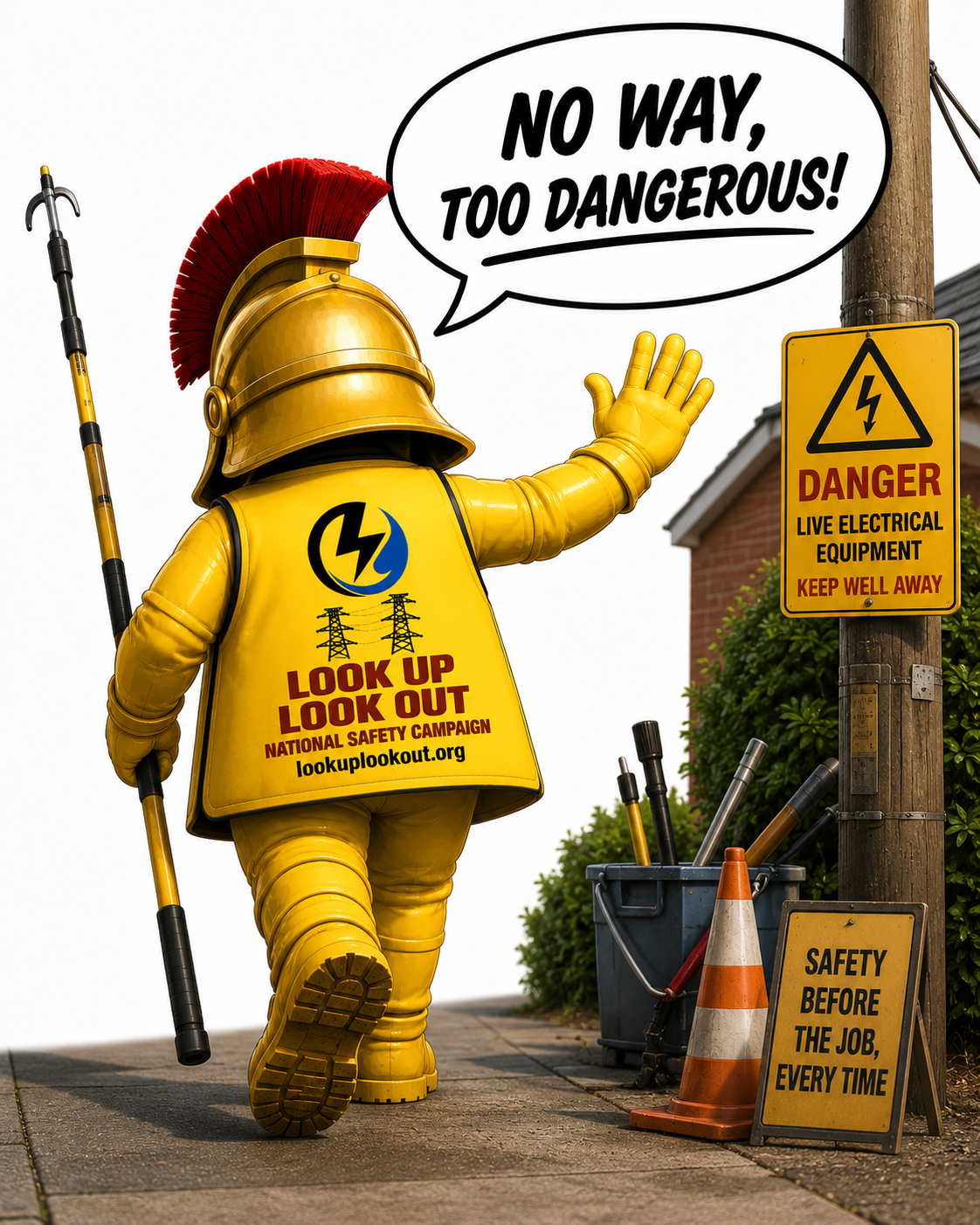
After understanding what electricity can do to the body, there is a question every user should ask before lifting a pole outdoors.
Is the job really worth the risk?
A lighter pole may feel easier to use.
A carbon-fibre pole may reduce fatigue.
A few less grams may make a day's work feel more comfortable.
But a few extra grams on the pole is nothing compared with the weight of what can happen afterwards.
Death.
Burns.
Kidney injury.
Nerve damage.
Amputation.
Life-changing trauma.
A family changed forever.
That is the real calculation.
105: stop first, ask before you start
If you see overhead power lines, service cables or anything you are unsure about, do not guess.
Do not start the job and hope for the best.
Do not rely on luck, judgement, or "I'll just be careful."
Call 105 in England, Scotland and Wales and speak to the local electricity network operator.
In Northern Ireland, call 03457 643643.
You can also use the Request Shrouding / DNO Advice form on the Look Up Look Out website.
That form exists for a reason.
If cables need to be assessed, shrouded, isolated, moved, or made safe before work begins, that conversation should happen before the pole ever goes up.
Not after.
Before using any long pole, ladder, tool or equipment outdoors, check:
· above the property
· above the driveway
· above the garden
· above garages
· above extensions and conservatories
· above rooflines
· around trees
· around solar panels
· near any cable entering or crossing the property
Look from more than one angle.
Power lines and service cables can be hidden by rooflines, trees, poor light, building angles or simply by where you are standing.
If there is any doubt, stop.
Call 105.
Use the Look Up Look Out Request Shrouding / DNO Advice form.
Get advice before work starts.
No job is worth gambling with overhead electricity.
Fibreglass, insulated sections and last-line protection
The campaign believes users should think carefully about the type of pole they are using, especially where electrical hazards may be present.
If you are working around solar panels, roofs, gutters, overhead service cables or any area where electrical equipment or overhead lines may be nearby, a fully fibreglass or properly declared non-conductive pole should be considered as a safer minimum starting point than an ordinary conductive carbon-fibre pole.
But even that must be understood properly.
A fibreglass pole is not permission to work near overhead power lines.
An insulated pole is not permission to work near overhead power lines.
A protected pole is not a magic shield.
The safest action is always to avoid the overhead line completely.
Insulated sections, fibreglass construction, warning labels and tested protection should be treated as additional layers of safety, not an excuse to take risks.
They are there for the mistake you did not see coming.
The hidden cable.
The awkward roofline.
The moment of distraction.
The movement of the pole.
The service cable you thought was something else.
The job you thought would only take five minutes.
That is why better pole choice matters.
Not because it makes electricity safe.
It does not.
It matters because human beings make human mistakes, and equipment should give them every possible chance.

The question before every job
Before buying or using any high-reach pole, ask:
· Is this pole conductive?
· Is it carbon fibre, aluminium, fibreglass or another material?
· Are any sections insulated?
· Are the insulated sections clearly identified?
· Are the warnings visible and durable?
· Is there clear electrical safety information before purchase?
· If electrical safety is claimed, is there evidence?
· Does the certificate or test evidence relate to the actual product?
· What does the evidence prove?
· What does it not prove?
· Would a fully fibreglass or better protected pole be safer for this type of work?
· Should I contact the electricity network operator before starting?
· Should I use the Look Up Look Out Request Shrouding / DNO Advice form?
If those answers are missing, unclear or hidden, pause.
Because after an overhead-line incident, nobody wishes they had chosen the lighter pole.
They wish the danger had been avoided.
They wish they had called 105.
They wish the cable had been assessed, shrouded, isolated or made safe.
They wish the warning had been clearer.
They wish they had chosen the safer method.
They wish they had walked away.
And sometimes, they do not get the chance to wish anything at all.
The truth people need to understand
A high-voltage electrical injury is not just a momentary shock.
It can put the heart at risk.
It can damage muscles.
It can threaten the kidneys.
It can burn deep tissue.
It can damage nerves.
It can take limbs.
It can take lives.
And in many cases, it can happen before the person even realises they are in danger.
That is why the message is simple:
Stop. Look up. Look out.
If there are overhead lines nearby, or if you are not completely sure what you are looking at, stop the job and get advice.
Call 105 in England, Scotland and Wales.
In Northern Ireland, call 03457 643643.
Use the Request Shrouding / DNO Advice form on the Look Up Look Out website.
No job, no customer, no deadline and no amount of money is worth your life.
Look up. Look out. Stay alive.
Medical note
This article is general safety information and is not medical advice.
Any suspected electrical injury, especially involving overhead lines, service cables, high voltage, burns, collapse, loss of consciousness, chest symptoms, breathing difficulty, muscle pain, weakness, confusion, or entry and exit wounds, should be treated as a medical emergency.
Call 999.
References and further reading
These references are included so readers can check the safety and medical background behind this article. They are provided for general information only and do not replace professional medical advice, HSE guidance, DNO advice or a site-specific risk assessment.
1. Health and Safety Executive (HSE): Electrical injuries
https://www.hse.gov.uk/electricity/injuries.htm
Supports: Explains electric shock effects including loss of muscle control, inability to let go, falls, burns and other serious injury risks.
2. Health and Safety Executive (HSE): Electricity - overhead power lines
https://www.hse.gov.uk/construction/safetytopics/overhead.htm
Supports: Explains that contact with a power line is not necessary for danger because close approach can allow flashover, and that contact can be lethal with voltages as low as 230V.
3. Health and Safety Executive (HSE): Overhead power lines
https://www.hse.gov.uk/electricity/information/overhead.htm
Supports: Provides practical guidance on assessing and reducing risks when working near overhead power lines.
4. Energy Networks Association: What to do if you have a power cut
https://www.energynetworks.org/customers/power-cut
Supports: Confirms that people in England, Scotland and Wales can call 105 to contact their local network operator, and gives the Northern Ireland number 03457 643643.
5. PowerCut105: Call 105
https://www.powercut105.com/en/
Supports: Explains that calling 105 is free and connects the caller with their local electricity network operator.
6. NCBI Bookshelf / StatPearls: Electrical Injuries
https://www.ncbi.nlm.nih.gov/books/NBK448087/
Supports: Medical overview of electrical injuries, including complications such as burns, pain, fatigue, muscle spasms and longer-term effects.
7. NCBI Bookshelf / StatPearls: Rhabdomyolysis
https://www.ncbi.nlm.nih.gov/books/NBK448168/
Supports: Explains rhabdomyolysis, CK/CPK rise, myoglobin-related kidney risk and the use of intravenous fluids to protect kidney function.
8. American Association for the Surgery of Trauma Clinical Consensus: Rhabdomyolysis management
https://pmc.ncbi.nlm.nih.gov/articles/PMC8804685/
Supports: Discusses fluid resuscitation, urine-output goals and prevention of acute kidney injury in rhabdomyolysis.
9. PubMed: Rhabdomyolysis following electrical injury
https://pubmed.ncbi.nlm.nih.gov/8848649/
Supports: Medical paper noting that severe electrical injury is often associated with acute rhabdomyolysis and elevated CK levels.
10. Look Up Look Out: Request Shrouding / DNO Advice form
https://www.lookuplookout.org/
Supports: Campaign route for visitors seeking guidance on DNO advice, shrouding requests and overhead-line safety information.
Plain-English note: This article deliberately uses simple language because it is aimed at working users and members of the public, not medical specialists. Medical terms such as CK, rhabdomyolysis and myoglobin are included only where they help explain why serious electrical injuries need urgent hospital treatment.