Public Safety Advice – Before You Use an Extendable Pole
Updated July 2026
Best for: Householders, DIY users and anyone hiring an exterior cleaner
Reading time: About 5–6 minutes
30-second summary
- Look above and around the whole work area before extending any pole.
- Long poles can reach, tilt or swing into cables unexpectedly.
- Carbon fibre, aluminium and other metals conduct electricity.
- Electricity may flash over without the pole directly touching the line.
- If you are uncertain about a cable, stop and seek advice. Do not guess,In Great Britain, you can call 105 free of charge or in Northern Ireland call NIE Networks on 03457 643 643
Safety boundary
Treat every overhead cable as potentially live. Keep the pole lowered and well clear until the cable and the safe working arrangements have been confirmed.
Most people think of extendable poles as useful everyday tools.
They are used for putting up Christmas lights, installing cameras, inspecting roofs, cleaning conservatories, clearing gutters, retrieving toys from trees, taking photographs, surveying buildings and carrying out DIY jobs around the home.
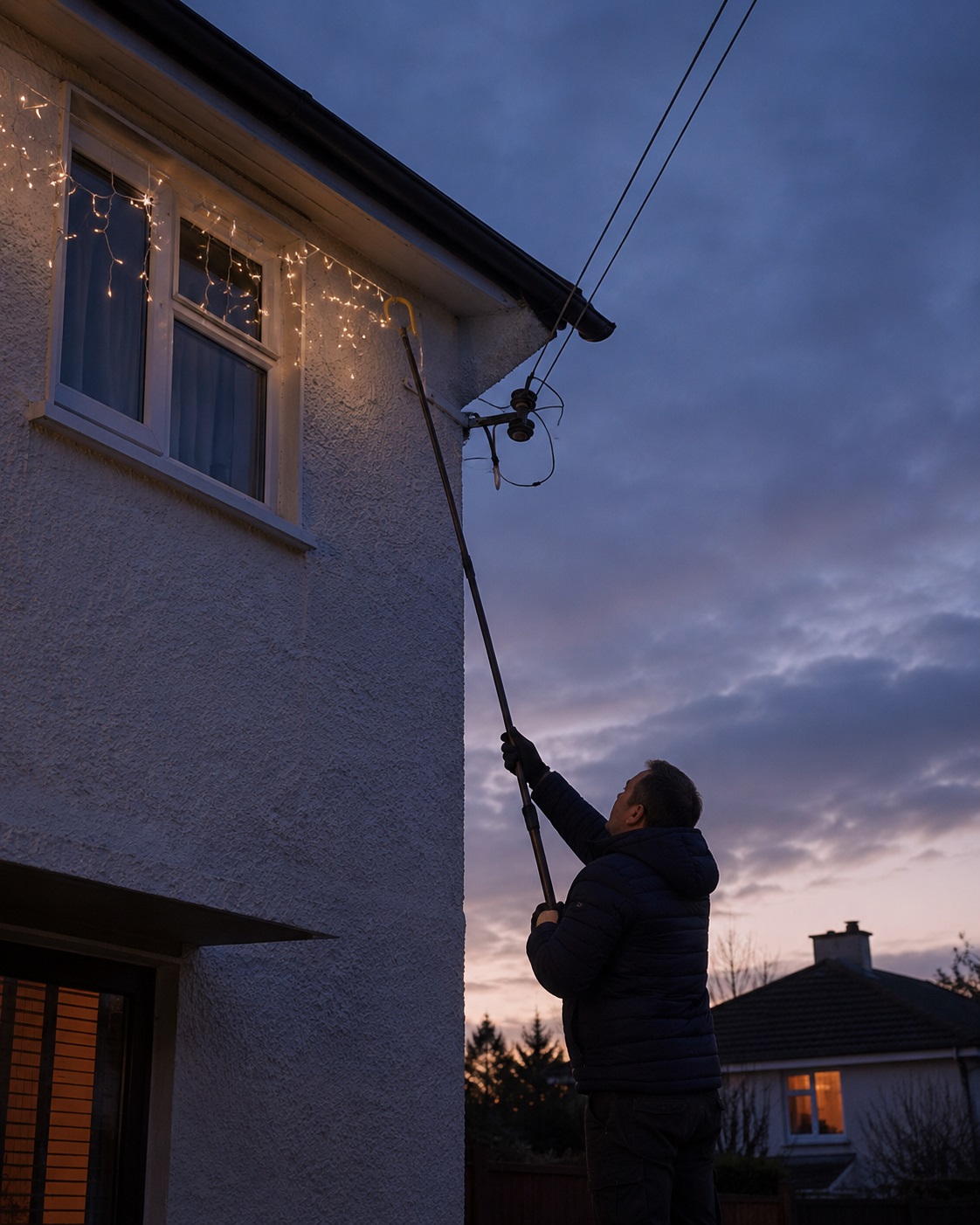
What many people do not realise is that some extendable poles are made from aluminium, carbon fibre or a mixture of materials.
Carbon fibre and aluminium are strong and lightweight, but both conduct electricity. The construction, condition and components of the complete pole may also affect the electrical risk.
If an extendable pole touches an overhead power line, or gets close enough for electricity to flash over through the air, the consequences can be catastrophic. Serious injury or death can happen in seconds.
Stop. Look up first.
Thousands of people use extendable poles every day without realising overhead power lines and house service cables may be nearby. This simple illustration shows everyday situations where taking a few seconds to look up could save your life.
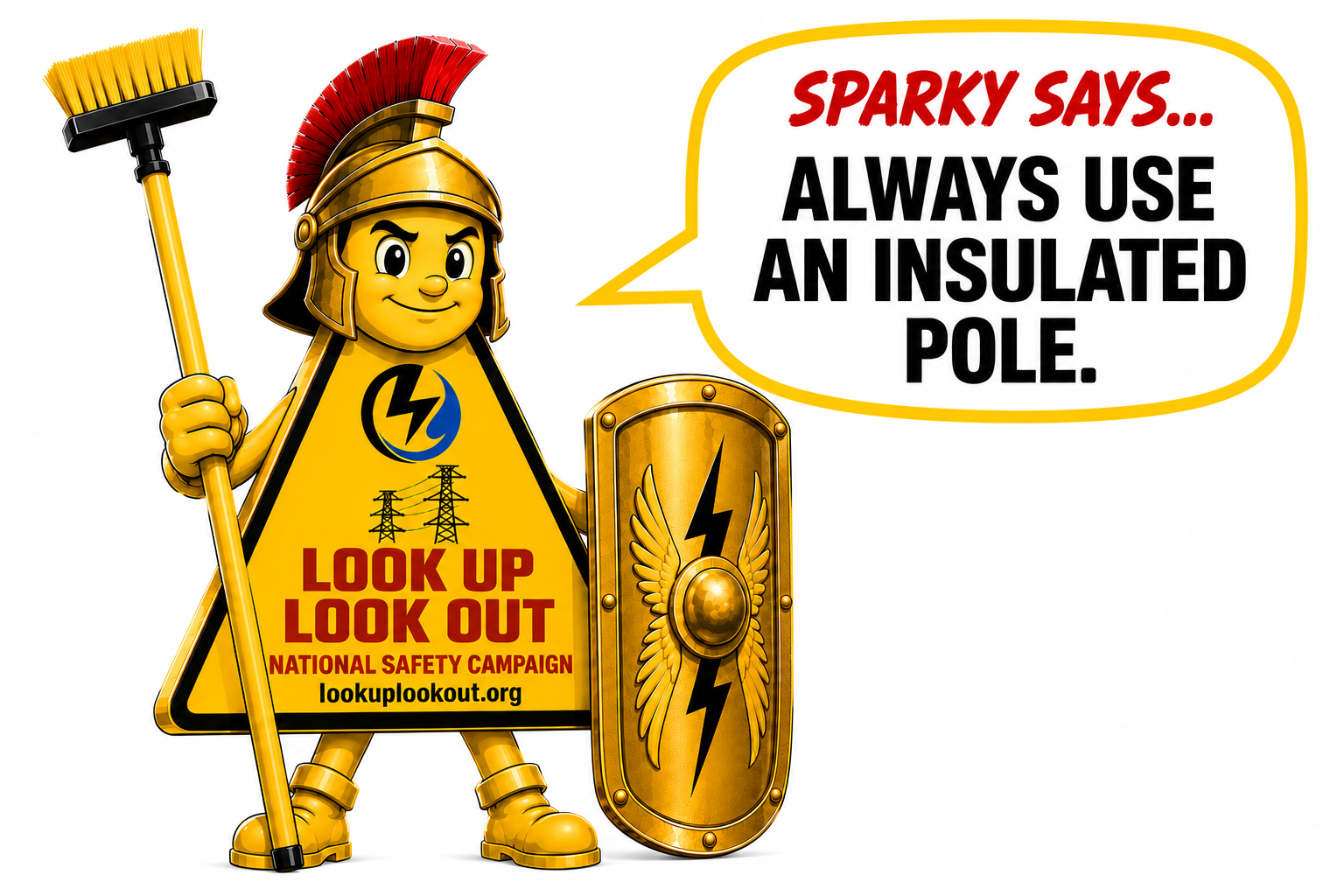
Look up before you lift up
Before using any extendable pole, always stop and look up.
Check carefully for:
- overhead power lines
- service cables running to houses, garages, sheds or outbuildings
- cables hidden by trees, hedges or rooflines
- power lines crossing gardens, driveways, fields or work areas
- cables that may be hard to see in poor light, bad weather or bright sunlight
Never assume a cable is insulated, harmless or safe to touch.
Some overhead lines are bare conductors. Others may look like ordinary black cables. You cannot judge the danger just by looking at them.
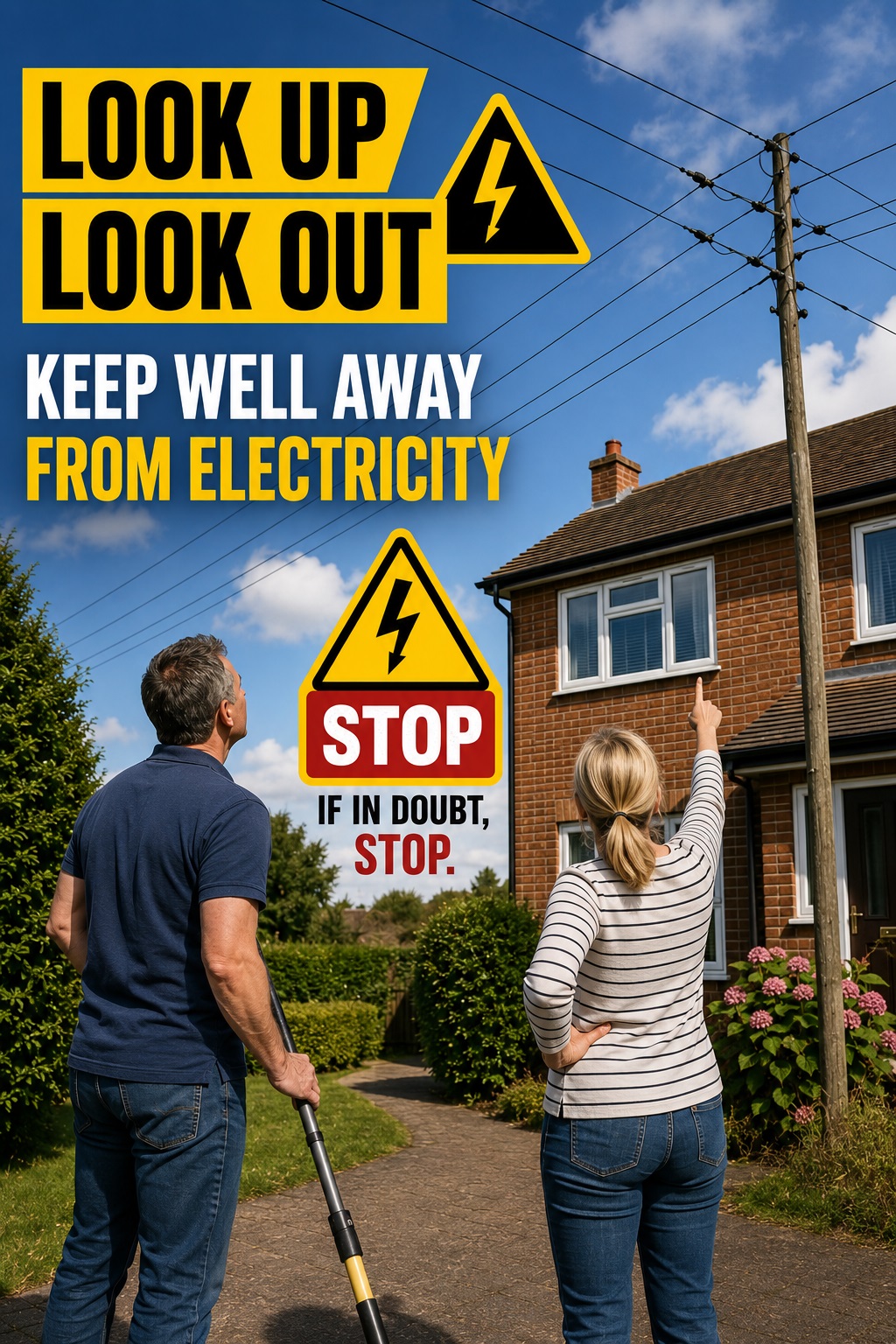
Keep well away from electricity
If there is any possibility that the pole could reach, fall, swing, bend, blow or be carried into an overhead power line, do not carry out the work.
Electricity can arc through the air. Direct contact is not always needed.
Wind, uneven ground, awkward angles, wet surfaces, tiredness and trying to “just reach a bit further” can all make the situation more dangerous.
If in doubt, stop.
In Great Britain, you can call 105 free of charge to reach your local electricity network operator for advice or to report a power issue.
In Northern Ireland, contact NIE Networks on 03457 643 643. They are available 24 hours a day, 7 days a week.
Be careful when buying poles online
Not all poles are the same.
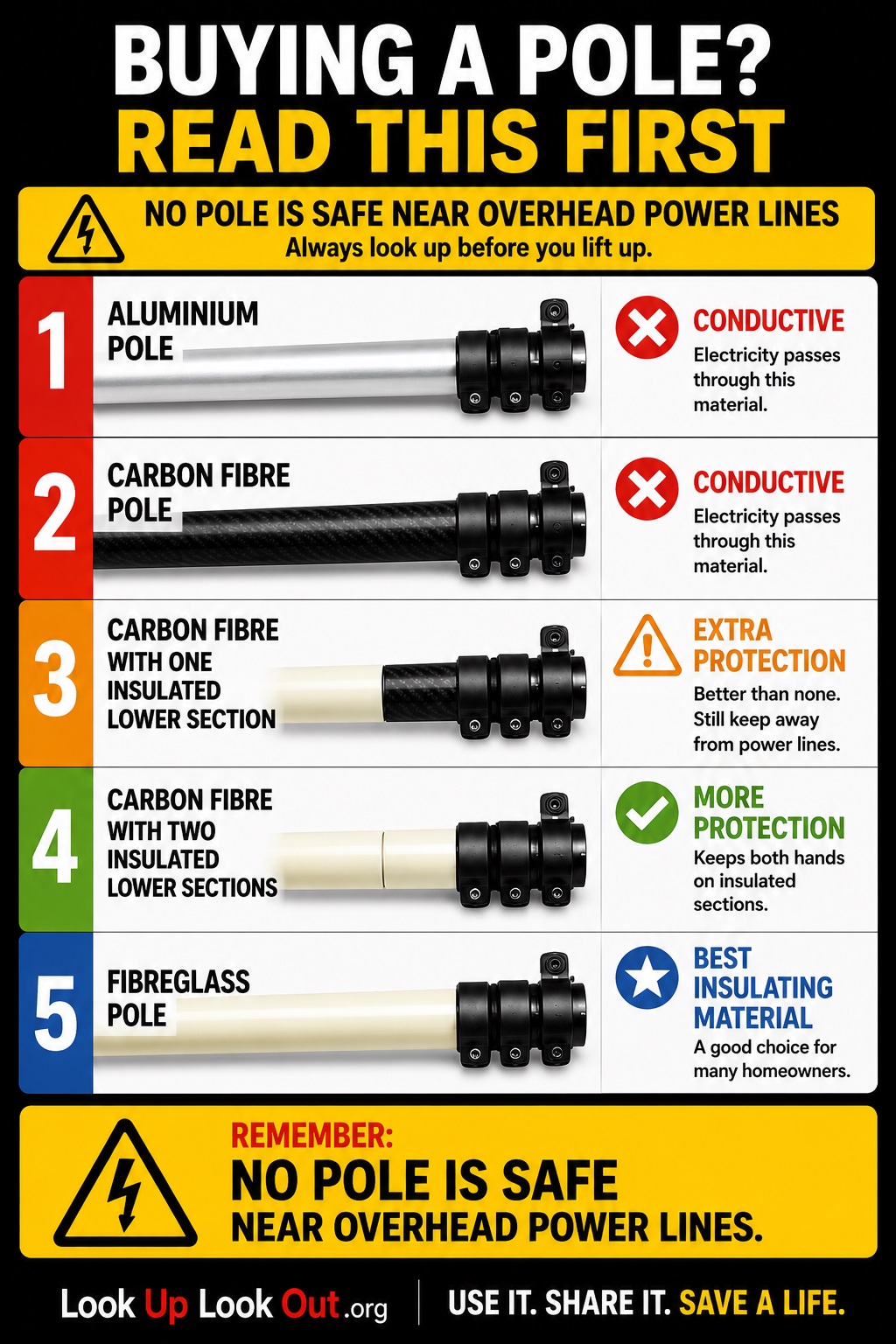
Some poles are made entirely from carbon fibre or aluminium . These may be strong and lightweight, but carbon fibre & aluminium can conduct electricity.
Some poles are made from fibreglass. These may be a better material choice from an electrical-safety point of view, but no pole should ever be treated as safe near overhead power lines.
Some professional poles include insulated sections designed to provide an additional layer of protection. However, insulation claims should be supported by clear information from the manufacturer, such as test evidence, certificates, technical details or safety guidance.
Be especially careful with cheap, imported, second-hand or marketplace poles advertised on websites such as eBay, Facebook Marketplace or similar selling platforms.
Before buying, ask:
- What material is the pole made from?
- Does it contain carbon fibre or aluminium ?
- Is any part of it insulated?
- Are the insulated sections clearly marked or a different colour?
- Has the pole been electrically tested?
- Is there a certificate or test report?
- Does the seller explain the limits of the safety claims?
- Are there clear warnings about overhead power lines?
If the advert does not clearly explain the material, insulation or electrical safety information, treat that as a warning sign.
A cheap pole is not cheap if it costs someone their life.
Ask for evidence before you buy
If a pole is advertised as insulated or electrically tested, don’t rely on the description alone. Ask the manufacturer, retailer or seller for evidence to support the claim.
This may include a Certificate or Declaration of Conformity, an electrical test report, or technical information showing what standard the pole has been tested against, what voltage it was tested at, and what part of the pole provides the insulation.
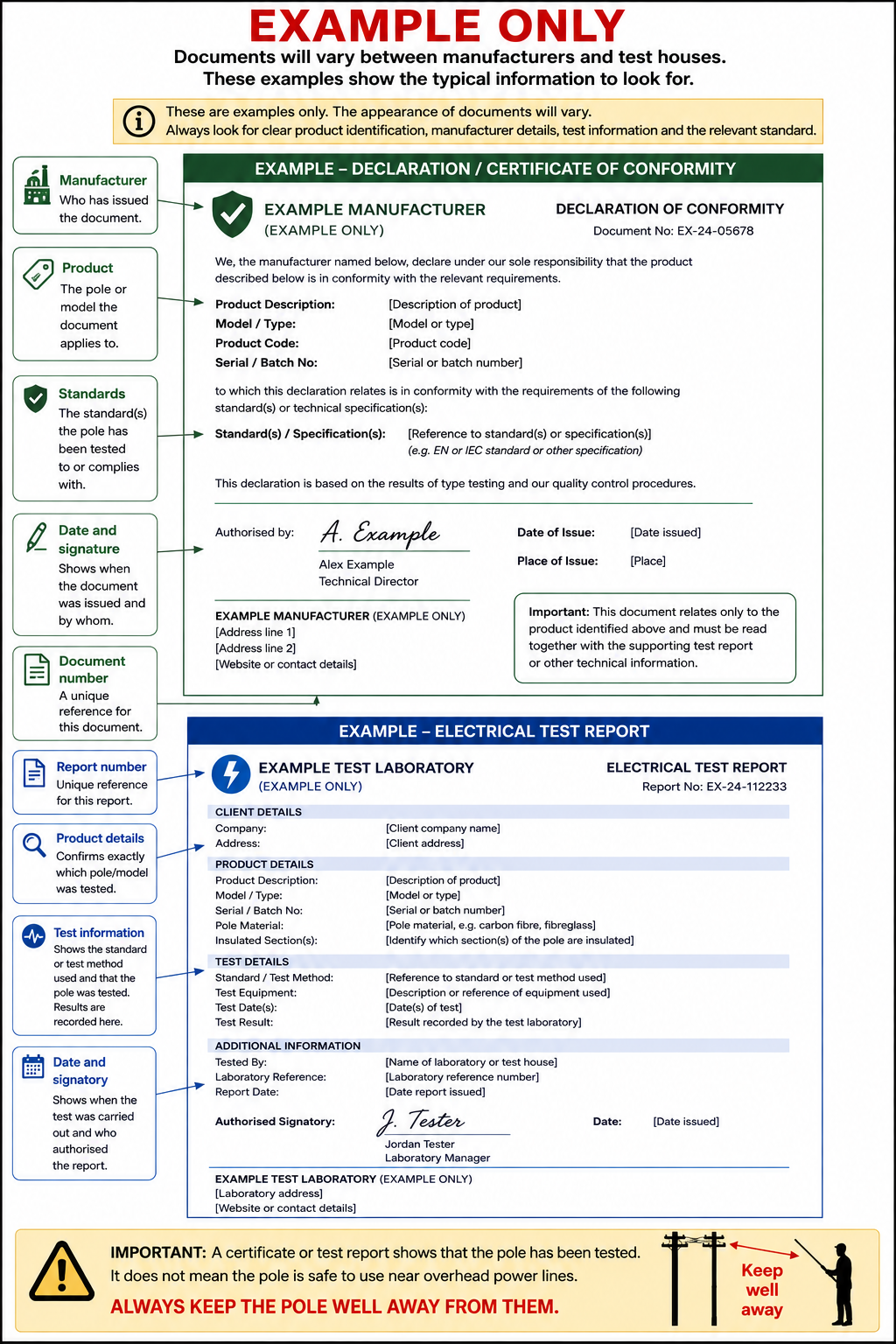
Check that the documents clearly identify the manufacturer and the pole or product you are buying. A certificate for a different product, or a document containing only general safety claims, does not tell you that your pole has been tested.
Remember: a certificate does not make a pole safe to use near overhead power lines. The safest approach is always to keep the pole well away from them.
Important safety message
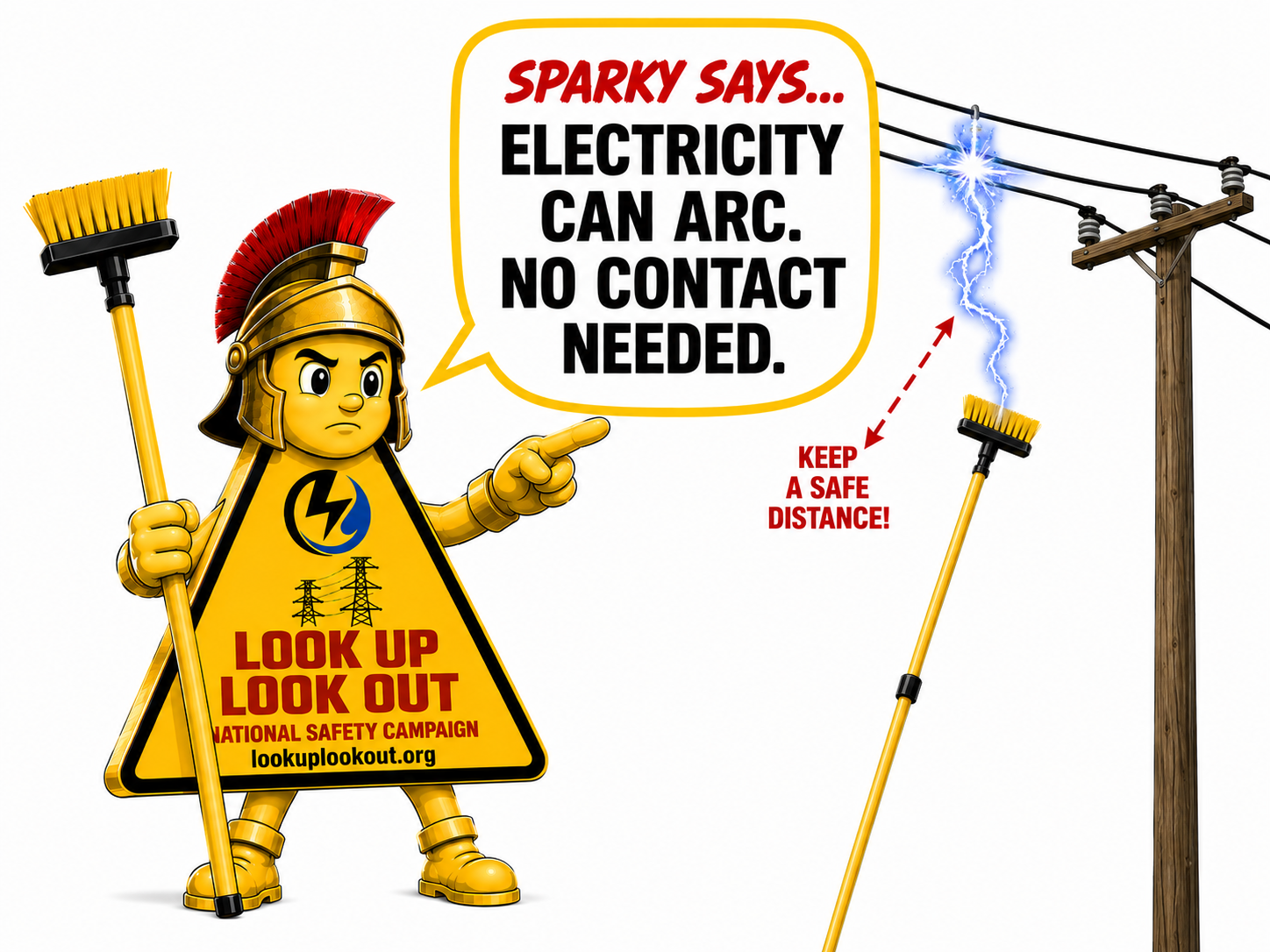
No pole should ever be used near overhead power lines.
Insulated sections, warning labels and safer materials are not permission to work near electricity. They are only additional layers of protection if something goes wrong.
The safest decision is always to avoid the hazard completely.
If a pole touches or gets close to a power line
Do not try to pull it away.
Do not touch the pole.
Do not touch anyone who may still be in contact with the pole or the electricity source.
Move away if it is safe to do so.
Keep other people well away.
Call emergency services if there is immediate danger, injury, fire or risk to life.
Report the danger to the electricity network operator using 105 in Great Britain, or NIE Networks on 03457 643 643 in Northern Ireland.
Remember
Look up.
Look out.
Check before you lift.
No task is worth risking your life.
Related on this site
- Before you start: look up, look out — practical guidance for window cleaners and professional pole users
- Safety basics — wider campaign context on poles and overhead lines